


When applying for a Canadian study permit, one document can significantly influence the outcome of your application—the Statement of Purpose (SOP).
A well-written SOP helps immigration officers understand your academic background, career goals, reasons for choosing Canada, and your intentions after completing your studies. In many cases, a strong SOP can strengthen an average profile, while a weak SOP can lead to questions about your credibility.
If you’re wondering How to Write a Strong SOP for Canada Study Visa, understanding the key elements of a successful Statement of Purpose is essential. This guide from Rajveer Chahal Education Consultant covers everything you need to know, along with practical SOP tips that can help increase your Canada visa approval chances.
Why Is an SOP Important?
A Statement of Purpose for Canada is more than just an essay. It tells your story and explains why studying in Canada makes sense for your educational and professional future.
Visa officers use the SOP to evaluate:
A convincing Canada SOP helps create confidence in your application.
What Makes a Strong Canada SOP?
A strong Canada Study Visa SOP should be clear, logical, and personalized.
It should answer the following questions:
- Who Are You?
Introduce your educational background and professional experience.
- Why This Course?
Explain why the chosen program is relevant to your academic and career goals.
- Why Canada?
Demonstrate why Canada offers the best opportunities compared to other countries.
- Why This Institution?
Discuss specific features of the college or university that influenced your decision.
- What Are Your Future Plans?
Clearly explain your career goals and how the program will help you achieve them.
SOP Tip #1: Start With a Strong Introduction
Your opening paragraph should immediately capture attention.
Briefly mention:
Avoid generic statements such as:
❌ “Canada is a beautiful country.”
Instead, focus on your academic objectives and professional growth.
This is one of the most effective SOP Tips That Increase Your Canada Visa Approval Chances.
SOP Tip #2: Explain Your Academic Journey
Visa officers want to understand your educational progression.
Include:
If your grades were average, explain how your experiences motivated you to pursue further education.
Remember that honesty builds credibility.
SOP Tip #3: Justify Your Course Selection
One of the biggest reasons for study permit refusals is poor course justification.
Your chosen program should:
For example:
Strong course relevance can significantly improve Canada Visa Approval Chances.
SOP Tip #4: Explain Why You Chose Canada
Avoid generic reasons.
Instead, mention:
A strong explanation strengthens your Canada SOP and demonstrates genuine educational intent.
SOP Tip #5: Explain Why You Selected the Institution
Many students overlook this section.
Research the institution carefully and mention:
Showing that you’ve researched the institution demonstrates commitment and seriousness.
SOP Tip #6: Present Clear Career Goals
One of the most important SOP Tips That Increase Your Canada Visa Approval Chances is demonstrating a clear career path.
Your SOP should explain:
- Short-Term Goals
What do you plan to do immediately after graduation?
- Long-Term Goals
Where do you see yourself in five to ten years?
Career objectives should align naturally with your chosen program.
SOP Tip #7: Address Educational Gaps Honestly
Many applicants worry about study gaps.
The key is providing a genuine explanation.
Examples include:
Never attempt to hide gaps.
Transparency strengthens your Statement of Purpose for Canada.
SOP Tip #8: Demonstrate Financial Preparedness
Your SOP should briefly discuss how your education will be funded.
Mention:
This helps reassure officers about your ability to manage educational expenses.
SOP Tip #9: Show Genuine Temporary Intent
Although students may later explore legal immigration pathways, your SOP should focus on your study objectives and career plans.
Demonstrate:
This can positively influence Canada Visa Approval Chances.
SOP Tip #10: Keep It Personalized
One of the biggest mistakes students make is copying SOP samples from the internet.
Visa officers review thousands of applications every year.
Generic SOPs often contain:
❌ Repetitive content
❌ Unrealistic goals
❌ Contradictory information
The Best Statement of Purpose for Canada Student Visa is always authentic and personalized.
Common SOP Mistakes That Lead to Visa Refusal
Many students unknowingly weaken their applications through avoidable mistakes.
- Generic Content
Using templates without personalization.
- Weak Course Justification
Failing to explain why the course is relevant.
- Unrealistic Career Goals
Making claims that do not align with education or experience.
- Poor Grammar
Language errors can reduce credibility.
- Inconsistent Information
Conflicting details between documents and SOP.
These are among the most common Common SOP Mistakes That Lead to Visa Refusal.
How to Write a Strong SOP for Canada Study Visa
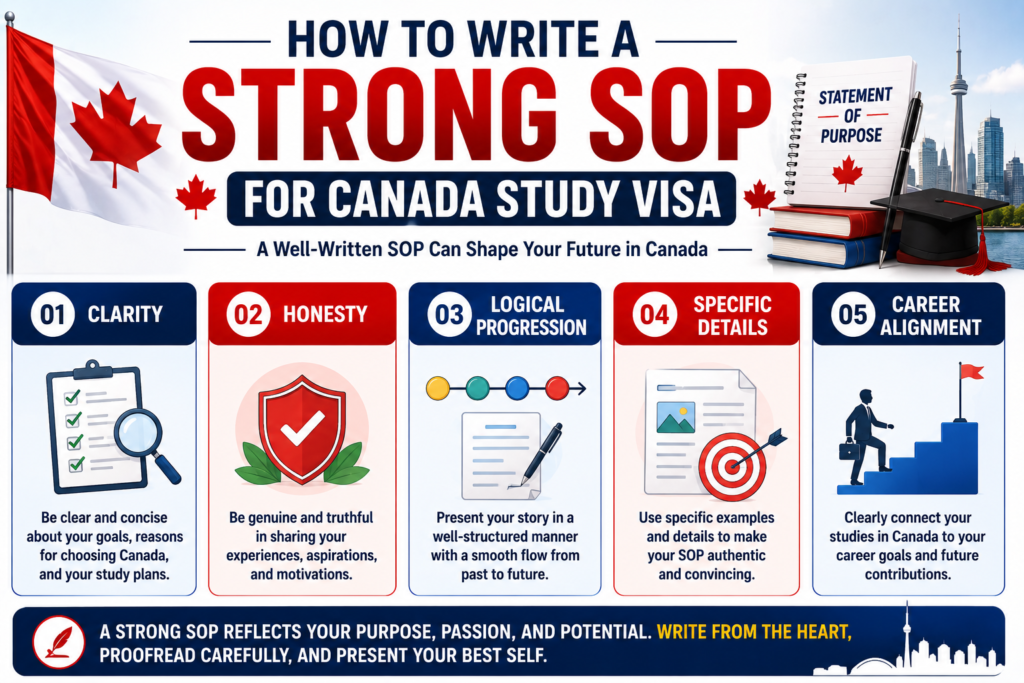
If you’re wondering How to Write a Strong SOP for Canada Study Visa, focus on:
Every paragraph should support your overall study plan.
Avoid unnecessary storytelling and focus on facts that strengthen your profile.
Canada Study Permit Trends and Statistics
Recent Canadian immigration data highlights the importance of submitting a well-prepared application.
Canada plans to issue approximately 408,000 study permits in 2026.
Canada issued approximately 437,000 study permits in 2025 under the international student cap.
IRCC data shows that application quality, documentation, financial preparedness, and study plan justification continue to play a major role in approval decisions.
These figures demonstrate that genuine applicants with strong documentation continue to receive approvals every year.
Why Professional SOP Guidance Matters
An SOP is often the most personal document in your application.
Professional guidance can help:
At Rajveer Chahal Education Consultant, we help students craft compelling SOPs that accurately represent their goals and maximize their chances of approval.
Final Thoughts
A strong SOP can be one of the most powerful tools in your study permit application.
By following these SOP Tips That Increase Your Canada Visa Approval Chances, you can create a compelling and authentic document that clearly communicates your educational objectives and future plans.
Whether you’re learning how to write a Strong SOP for Canada Study Visa, avoiding Common SOP Mistakes That Lead to Visa Refusal, or trying to create the Best Statement of Purpose for Canada Student Visa, careful preparation can significantly improve your chances of success.
Talk to our experts at 7508361111 or 7068161111 for professional Canada immigration guidance and support. Contact us for more details and further assistance
Related Articles:
FAQs
1. What is an SOP for Canada study visa?
An SOP is a Statement of Purpose that explains your academic background, study plans, and career goals.
2. How important is SOP for Canada visa approval?
It is one of the most important supporting documents and can significantly influence visa decisions.
3. How long should a Canada SOP be?
Most effective SOPs range between 800 and 1,500 words, depending on the applicant’s profile.
4. What should be included in a Canada SOP?
Academic history, course selection, reasons for choosing Canada, career goals, and financial information.
5. Can a strong SOP improve Canada visa approval chances?
Yes. A strong SOP can strengthen an application and address potential concerns.
6. What are common SOP mistakes that lead to visa refusal?
Generic content, poor course justification, inconsistent information, and unrealistic career goals.
7. How can I write a strong SOP for Canada study visa?
Focus on clarity, honesty, relevance, and career alignment.
8. Should I use an SOP template?
Templates can provide structure, but the content should always be personalized.
9. Does SOP need to explain study gaps?
Yes. Any educational or employment gaps should be addressed honestly.
10. Can average students write a successful SOP?
Absolutely. A well-written SOP can effectively present the strengths of any applicant.