
Canada continues to remain one of the most preferred destinations for international workers due to its strong economy, high quality of life, and immigrant-friendly policies. However, with the changing labour market and immigration priorities, the government has introduced several updates under the Canada Work Permit Rules 2026 framework. These new regulations are expected to impact foreign workers, employers, students, and families planning to move to Canada.
In this blog by Rajveer Chahal Education Consultant, we will break down the latest updates, explain who will be affected, and discuss how applicants can prepare for the new system effectively.
Understanding the Major Changes in Canada Work Permit Rules 2026
The newly introduced Canada Work Permit Rules 2026 aim to make the immigration process more streamlined while ensuring that Canadian employers hire workers according to actual labour market demands. The government is focusing on reducing misuse of temporary permits while creating better opportunities for skilled professionals.
One of the biggest highlights under the New Canada Work Permit Changes 2026 is stricter eligibility verification. Applicants may now face enhanced scrutiny regarding:
- Job offer authenticity
- Employer background checks
- Financial stability proof
- Previous work experience verification
- Supporting immigration documents
Another major update is the digitisation of application systems. The Canadian government is improving online processing systems to reduce delays and increase transparency. These reforms are closely connected to recent IRCC work permit updates, which focus on:
- Faster application processing
- Improved applicant tracking systems
- Better communication between applicants and immigration authorities
- Reduced paperwork and manual verification delays
The revised system also emphasises occupations facing genuine labour shortages. Under the updated policies, priority may be given to workers in sectors such as:
- Healthcare
- Construction
- Information Technology (IT)
- Transportation and logistics
- Skilled trades
Key goals behind these Canada immigration policy changes include:
- Protecting foreign workers from exploitation
- Ensuring fair hiring practices
- Supporting Canada’s economic growth
- Filling critical labour shortages efficiently
- Preventing misuse of temporary work permits
The government believes these reforms under the Canada Work Permit Rules 2026 will create a fairer and more transparent immigration system for both employers and international workers.
Also Check: According to official IRCC data, Canada had:
- 1,481,590 people holding only work permits as of January 31, 2026
- The number increased to 1,492,935 work permit holders by February 28, 2026
Read More: Canada Spouse Visa PFL Letter Explained 2026
Open Work Permit and Eligibility Changes in 2026
The Canada Open Work Permit 2026 category has also undergone significant modifications. Open work permits allow individuals to work for almost any employer in Canada without requiring a specific job offer. These permits are highly popular among spouses of international students and skilled workers.
Under the updated policies, eligibility criteria for spouses and dependents may become more selective. The government is expected to prioritise applicants connected to high-demand occupations and long-term economic programs.
The updated Eligibility for Canada work permit 2026 rules may require applicants to provide additional supporting documents, including:
- Proof of genuine relationship for spouse applications
- Employment verification letters
- Financial support evidence
- Language proficiency records in certain cases
- Updated travel and identity documents
The authorities are also increasing compliance checks to prevent fraudulent applications. Applicants should ensure that all documents are accurate and properly verified before submission.
In addition, the Canada immigration policy changes indicate a stronger focus on skilled labour retention. Workers already contributing to the Canadian economy may receive easier pathways toward permanent residency.
These changes are designed to ensure that open work permits are issued to applicants who can genuinely contribute to Canada’s workforce and economic growth.
Also Read: Canada PR 2026: New Rules, Selective Immigration & What Applicants Must Know
Impact on Employers and the LMIA Process
The LMIA rules Canada 2026 are another major area of reform. LMIA, or Labour Market Impact Assessment, is a document employers often need before hiring foreign workers.
Under the revised rules, employers may face stricter obligations to prove that no qualified Canadian worker is available for the position. Authorities are also increasing audits and inspections to ensure compliance with labour laws and wage standards.
The Canada Temporary Foreign Worker Program 2026 will now focus more on industries facing critical labour shortages. Employers may need to follow stricter compliance standards related to salaries, employee welfare, and workplace conditions.
Expected Changes Under the New Rules:
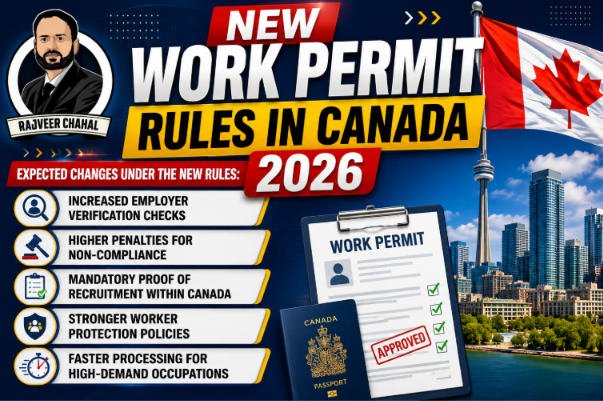
These Canada immigration policy changes aim to reduce exploitation and promote ethical hiring practices.
For applicants, choosing a genuine employer is now more important than ever. Before accepting a job offer, workers should verify the employer’s legitimacy and ensure the position meets Canadian immigration standards.
Also Read: Diploma vs Degree Canada: Which Gets Visa
How to Prepare for Canada’s New Work Permit Rules in 2026
With these major reforms approaching, applicants should start preparing early. Understanding the Canada Work Permit Rules 2026 can help avoid delays, refusals, or legal complications.
Here are some practical steps applicants can follow:
Research Updated Immigration Policies
Stay informed about the latest Canada Work Visa Updates 2026 and official announcements from immigration authorities. Rules may continue evolving based on labour market demands.
Verify Employers Carefully
Since the LMIA rules Canada 2026 involve stricter employer checks, workers should ensure job offers are genuine and legally compliant.
Strengthen Documentation
Prepare accurate records for work experience, finances, education, and identity verification. Updated Eligibility for Canada work permit 2026 guidelines place heavy emphasis on document authenticity.
Focus on High-Demand Occupations
Canada is prioritising sectors facing labour shortages. Applicants in healthcare, IT, construction, and skilled trades may benefit under the Canada Temporary Foreign Worker Program 2026.
Seek Professional Guidance
Immigration regulations can be complex. Consulting experienced professionals can help applicants understand the latest Canada immigration policy changes and improve application quality.
The upcoming changes are intended to strengthen Canada’s immigration system while supporting economic growth and labour market stability. Although the process may become stricter, genuine applicants with strong profiles will continue to find excellent opportunities in Canada.
Also Read: How Visa Officers Assess SOP for Approval
Final Thoughts
The Canada Work Permit Rules 2026 represent a significant shift in how Canada manages foreign workers and temporary immigration programs. From stricter employer verification to revised eligibility standards, these reforms aim to create a more transparent and efficient immigration system.
The New Canada Work Permit Changes 2026, updated LMIA rules Canada 2026, and broader Canada immigration policy changes will affect workers, students, employers, and families alike. Understanding these updates early can help applicants prepare stronger applications and improve their chances of success.
As Canada continues addressing labour shortages and economic priorities, skilled and genuine applicants will still have strong opportunities to build successful careers in the country. Staying informed about the latest IRCC work permit updates and adapting to the evolving immigration landscape will be the key to success in 2026 and beyond.
Contact us for further details and assistance.
(FAQs)
1. What are the new Canada Work Permit Rules 2026?
The Canada Work Permit Rules 2026 include stricter eligibility checks, stronger employer verification, updated LMIA requirements, and improved digital processing systems for foreign workers.
2. What is changing under the New Canada Work Permit Changes 2026?
The New Canada Work Permit Changes 2026 focus on reducing misuse of temporary permits, prioritizing skilled workers, and improving transparency in the immigration process.
3. What is an LMIA in Canada?
LMIA stands for Labour Market Impact Assessment. Under the LMIA rules Canada 2026, employers must prove that no qualified Canadian worker is available before hiring a foreign worker.
4. Will the Canada Open Work Permit 2026 rules change?
Yes, the Canada Open Work Permit 2026 category may include stricter eligibility requirements, especially for spouses and dependents.
5. Which industries will benefit most from the new work permit rules?
Industries facing labor shortages such as healthcare, construction, IT, transportation, and skilled trades are expected to benefit the most.
6. What are the latest IRCC work permit updates?
Recent IRCC work permit updates focus on faster application processing, improved digital systems, and stronger verification procedures for applicants and employers.
7. How will the Canada Temporary Foreign Worker Program 2026 change?
The Canada Temporary Foreign Worker Program 2026 will become more targeted toward critical labor shortage sectors and include stricter employer compliance requirements.
8. What documents are important for the Eligibility for Canada work permit 2026?
Applicants may need proof of work experience, valid job offers, financial documents, identity proof, and supporting employer documents to meet the Eligibility for Canada work permit 2026.
9. Will Canada still accept foreign workers in 2026?
Yes, Canada will continue welcoming skilled foreign workers, especially in high-demand occupations that support the country’s economy.
10. How can applicants prepare for the Canada immigration policy changes?
Applicants should stay updated on policy changes, prepare accurate documentation, verify employers carefully, and ensure they meet all immigration requirements before applying.