


Applying for a visitor visa is an important step when planning an overseas trip for tourism, visiting family, or attending a short event. However, submitting an application does not guarantee approval. Visa officers assess applications according to the requirements of the destination country and the applicant’s individual circumstances.
Indian applicants can reduce avoidable errors by preparing accurate documents, explaining their travel plans clearly, and understanding the visa requirements before applying.
This guide covers common visitor visa application mistakes and practical ways to avoid them.
1. Providing an Unclear Purpose of Travel
One common mistake is failing to explain why the applicant wants to visit the country.
For example, an application may mention tourism but provide no clear travel itinerary or explanation of the planned activities. If the applicant intends to visit family, the application should accurately explain the relationship and purpose of the visit.
How to avoid this mistake:
Your stated purpose should reflect your actual travel plans.
2. Insufficient or Unclear Financial Evidence
Applicants may submit bank statements without adequately demonstrating how they will pay for their trip.
Visa requirements differ by country. Officers may consider the expected travel expenses, available funds, and whether another person will sponsor the visit.
A large recent deposit without an explanation may also raise questions about the source of funds.
How to avoid this mistake:
Provide the financial documents required by the destination country. Where relevant, include bank statements, income evidence, employment records, or a sponsor’s supporting documents.
If there are unusual transactions, explain their source honestly and provide evidence where available.
There is no single bank balance that guarantees visitor visa approval for every country.
3. Weak Evidence of Reasons to Return
Visitor visa applicants may need to demonstrate that their proposed stay is temporary and that they meet the destination country’s immigration requirements.
Depending on the country and individual circumstances, relevant evidence may include employment, business responsibilities, family commitments, studies, or other ongoing obligations.
However, no single document automatically guarantees approval.
How to avoid this mistake:
Explain your circumstances accurately and provide relevant supporting evidence. Avoid submitting documents that do not reflect your actual situation.
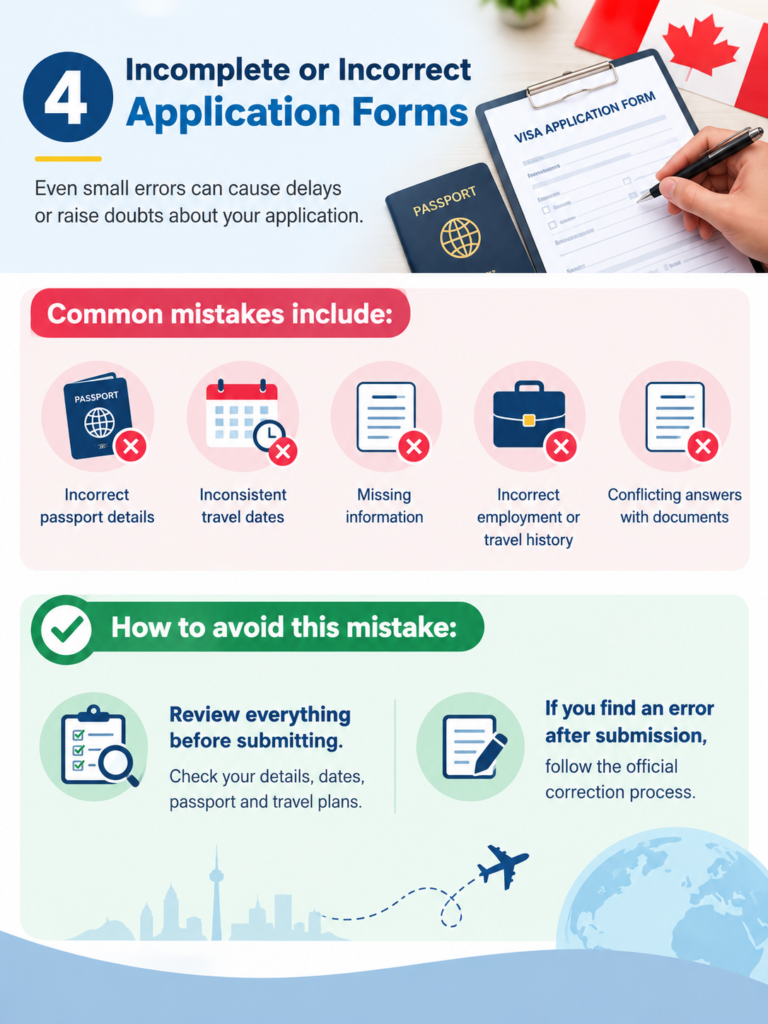
4. Incomplete or Incorrect Application Forms
Errors in an application form can create delays or concerns about the accuracy of the information provided.
Common examples include:
How to avoid this mistake:
Review the entire application before submitting it. Check names, dates, passport details, travel plans, and answers against your original documents.
If you discover an error after submission, follow the official correction procedure for that country rather than attempting to conceal it.
5. Submitting Inconsistent Documents
An application may contain documents that do not appear to match one another.
For example, the travel dates on an itinerary may differ from those stated in the application, or employment information may not match the details in a supporting letter.
These inconsistencies can make it harder for an officer to understand the application.
How to avoid this mistake:
Check that your application form, itinerary, financial evidence, invitation letter, and employment documents are consistent. If circumstances have changed, explain the change truthfully.
6. Not Providing a Clear Travel Itinerary
A vague travel plan can make it difficult to understand the purpose and practical arrangements of a visit.
Depending on the destination’s requirements, applicants may need to provide details such as intended travel dates, accommodation, planned activities, or information about the person they intend to visit.
How to avoid this mistake:
Prepare a realistic itinerary that matches your stated purpose and budget. Do not create false bookings or provide fabricated travel documents.
Check whether the relevant visa authority requires confirmed reservations or only proposed travel arrangements before purchasing non-refundable tickets.
7. Ignoring Previous Visa Refusals
Some applicants do not adequately address a previous visa refusal when making a new application.
Whether previous refusals must be disclosed depends on the application form, but applicants should answer all questions truthfully.
Submitting essentially the same application without addressing relevant concerns may not resolve the issues identified previously.
How to avoid this mistake:
Read the refusal letter carefully. Identify the concerns stated by the visa authority and determine whether you have new or clearer evidence that addresses them.
A new application should be accurate and supported by the circumstances and documents relevant to your case. Reapplying does not guarantee approval.
8. Using False or Misleading Documents
Providing fabricated bank statements, employment letters, invitation letters, or other misleading information can have serious consequences.
Depending on the country and circumstances, misrepresentation may result in refusal, cancellation, or restrictions on future applications.
How to avoid this mistake:
Submit genuine documents and answer every question honestly. If you cannot provide a particular document, check the official instructions to determine whether an explanation or alternative evidence is accepted.
Never use an agent who suggests hiding information or creating false documents.
9. Applying Without Checking the Correct Visa Requirements
Visitor visa requirements vary by destination country, nationality, travel purpose, and individual circumstances.
Applicants sometimes rely on outdated online information or assume that requirements are identical across countries.
For example, the documents and application procedures for a Canadian visitor visa are different from those for a UK Standard Visitor visa or a US visitor visa.
How to avoid this mistake:
Check the official immigration website or embassy instructions for your destination. Confirm the required forms, documents, fees, biometrics, appointment procedures, and processing guidance before applying.
10. Leaving the Application Until the Last Minute
Applying too close to the planned travel date can create unnecessary pressure.
Applicants may have limited time to obtain documents, attend appointments, or respond to requests from the visa authority. Processing times can vary and are not guaranteed.
How to avoid this mistake:
Start preparing early, check the current processing guidance, and allow time for appointments and additional document requests.
Avoid making non-refundable travel commitments until you understand the risks and requirements.
Frequently Asked Questions
1. What are common reasons for visitor visa refusal?
Reasons vary by country and applicant. They may include concerns about the purpose of travel, financial circumstances, temporary-stay requirements, incomplete information, or inconsistencies in the application.
2. Can I apply again after a visitor visa refusal?
In many cases, applicants can submit a new application, but the applicable rules depend on the destination country. Review the refusal reasons and address relevant issues before reapplying.
3. Does a strong bank balance guarantee visitor visa approval?
No. Financial evidence is only one part of an application. The officer may also consider the travel purpose, supporting documents, and other applicable requirements.
4. Should I book flight tickets before visa approval?
Requirements differ by country. Check the official instructions to see whether confirmed tickets are required. Avoid non-refundable bookings before understanding the risk of a refusal or delay.
5. Can an immigration consultant guarantee visitor visa approval?
No legitimate consultant can guarantee a visa decision. The decision is made by the relevant immigration authority.
Conclusion
Visitor visa applications require careful preparation, accurate information, and genuine supporting documents. Indian applicants should avoid unclear travel plans, incomplete forms, unexplained financial evidence, inconsistent documents, and inaccurate information.
Before applying, review the official requirements for your destination and ensure your documents reflect your actual circumstances. If your application has previously been refused, carefully consider the reasons provided before submitting another application.
Important: Visa requirements differ by country and can change. Always check the relevant government’s official immigration guidance before applying.
For professional assistance with understanding visitor visa requirements and preparing documentation, applicants can consult Rajveer Chahal Education Consultant (RCEC).


