


Spousal Sponsorship Processing Times 2026
For couples applying for Canadian spousal sponsorship in 2026, processing time is one of the biggest practical considerations.
The choice between inland and outland sponsorship can affect where the sponsored spouse lives during processing, work-permit options, and travel considerations.
According to IRCC figures reported on January 31, 2026, applications destined outside Quebec had approximate processing times of:
| Application | Processing Time |
| Overseas / Outland | 12.6 months |
| In Canada / Inland | 14 months |
| Quebec – Overseas | 33 months |
| Quebec—In Canada | 25 months |
These figures are estimates and can change as IRCC’s application inventory and processing capacity change.
Therefore, couples should check the latest IRCC processing-time information before making decisions based on processing time alone.
Inland vs. Outland Spousal Sponsorship in 2026
The main difference between inland and outland sponsorship is where the sponsored spouse or partner is living and which application class applies.
Inland Sponsorship
Inland sponsorship is generally used when the sponsored spouse or common-law partner is living in Canada with the sponsor and intends to remain in Canada during the processing of the permanent residence application.
One important consideration is the possibility of applying for an open work permit if the sponsored spouse or partner meets IRCC’s eligibility requirements.
Outland Sponsorship
Outland sponsorship generally falls under the Family Class and is commonly used when the sponsored spouse or partner lives outside Canada.
The sponsored person does not generally need to remain in Canada while the application is being processed, which can provide more flexibility for couples who are living in different countries.
Inland vs. Outland Processing Time
Based on IRCC’s January 31, 2026 figures, there is a relatively small difference between the reported processing times for applications outside Quebec:
This means couples should not choose an application route solely because one processing-time figure appears shorter.
Processing times can change, and individual applications can take longer or shorter depending on the circumstances.
The location of the applicant, completeness of the application, background checks, additional document requests, and other processing requirements can all affect the timeline.
Why Inland Sponsorship May Be Relevant for Couples Living in Canada
If the sponsored spouse is already living in Canada with their Canadian spouse or partner, inland sponsorship may be an option depending on their circumstances.
One of the practical considerations is the open work permit.
Eligible sponsored spouses and common-law partners living in Canada can apply for an open work permit under IRCC’s current rules.
Generally, the permanent residence application needs to have received an Acknowledgement of Receipt (AOR) before the open work permit application can be submitted, although IRCC provides limited exceptions for certain applicants whose temporary status is expiring soon.
This can allow an eligible spouse to work in Canada while waiting for their permanent residence application to be processed.
Why Some Couples Choose Outland Sponsorship
Outland sponsorship can be relevant when the sponsored spouse is living outside Canada.
For example, a Canadian citizen may be living in Canada while their spouse continues to live in India, the UK, the UAE, or another country during the processing period.
The sponsored spouse does not have to remain in Canada throughout the permanent residence process.
This can be useful when:
However, an outland sponsorship application does not automatically give the applicant the right to enter Canada.
Can an Outland Sponsored Spouse Visit Canada?
Yes, an outland-sponsored spouse may be able to visit Canada while the sponsorship application is being processed if they meet the requirements for temporary entry.
However, submitting a sponsorship application does not guarantee admission to Canada.
The applicant must still satisfy the requirements for entering Canada as a temporary visitor, and the final decision is made by the relevant Canadian border authorities.
Couples should therefore avoid assuming that an outland sponsorship application automatically allows the sponsored spouse to live in Canada while waiting for permanent residence.
Can an Inland Sponsored Spouse Travel Outside Canada?
Travel should be considered carefully when applying through the inland route.
An inland applicant may be able to travel outside Canada, but maintaining valid temporary status and being able to return to Canada are important considerations.
Leaving Canada does not automatically cancel a permanent residence application, but there can be risks if the applicant cannot return to Canada or no longer meets the requirements associated with the inland class.
Couples with important travel plans should consider their individual circumstances before choosing an application route.
What Can Delay Spousal Sponsorship Processing in 2026?
Even when an application falls within IRCC’s published processing-time estimate, several issues can result in additional processing.
Incomplete Application
Missing forms, signatures, or required documents can create problems and may result in an application being returned.
Additional Document Requests
IRCC may request additional documents or information during processing.
If the applicant receives a request, responding within the specified timeframe is important.
Background Checks
Background, security, and other admissibility checks can affect processing time.
Medical Examination
The sponsored applicant and applicable family members may need to complete medical requirements.
Relationship Assessment
IRCC may examine whether the relationship meets the applicable requirements.
In some cases, an interview may also be requested.
Quebec Applications
Quebec-bound applications can have substantially different processing times because of Quebec’s separate immigration requirements.
For example, IRCC reported approximately 33 months for overseas Quebec applications and 25 months for applications processed in Canada as of January 31, 2026.
Inland vs Outland: Important Differences in 2026
| Factor | Inland | Outland |
| Sponsored spouse generally living | Canada | Outside Canada |
| Application class | Spouse/Common-Law Partner in Canada Class | Family Class |
| Couple living together in Canada | Generally applicable | Not required |
| Open work permit | Available to eligible applicants | Different considerations |
| The applicant must remain in Canada during processing. | Generally intended | No |
| Visiting Canada during processing | Travel considerations apply. | Possible if temporary-entry requirements are met |
| Processing time outside Quebec | Approx. 14 months | Approx. 12.6 months |
| Quebec processing | Approx. 25 months | Approx. 33 months |
Note: Processing times are estimates and can change.
Should You Choose Inland or Outland Sponsorship?
There is no single route that fits every couple.
Instead of looking only at the published processing time, consider:
Where is the sponsored spouse currently living?
If the spouse is already living in Canada with the sponsor, inland sponsorship may be relevant.
If the spouse is living outside Canada, outland sponsorship may be more appropriate.
Does the spouse need to work in Canada?
If the sponsored spouse is eligible for an open work permit, this can be an important consideration when comparing the two options.
Are international trips necessary?
If the sponsored spouse expects to travel frequently while the application is being processed, the couple should carefully consider the implications of each application route.
Is the application going to Quebec?
Quebec-bound applications currently have significantly different processing times, so this should be considered before comparing inland and outland timelines.
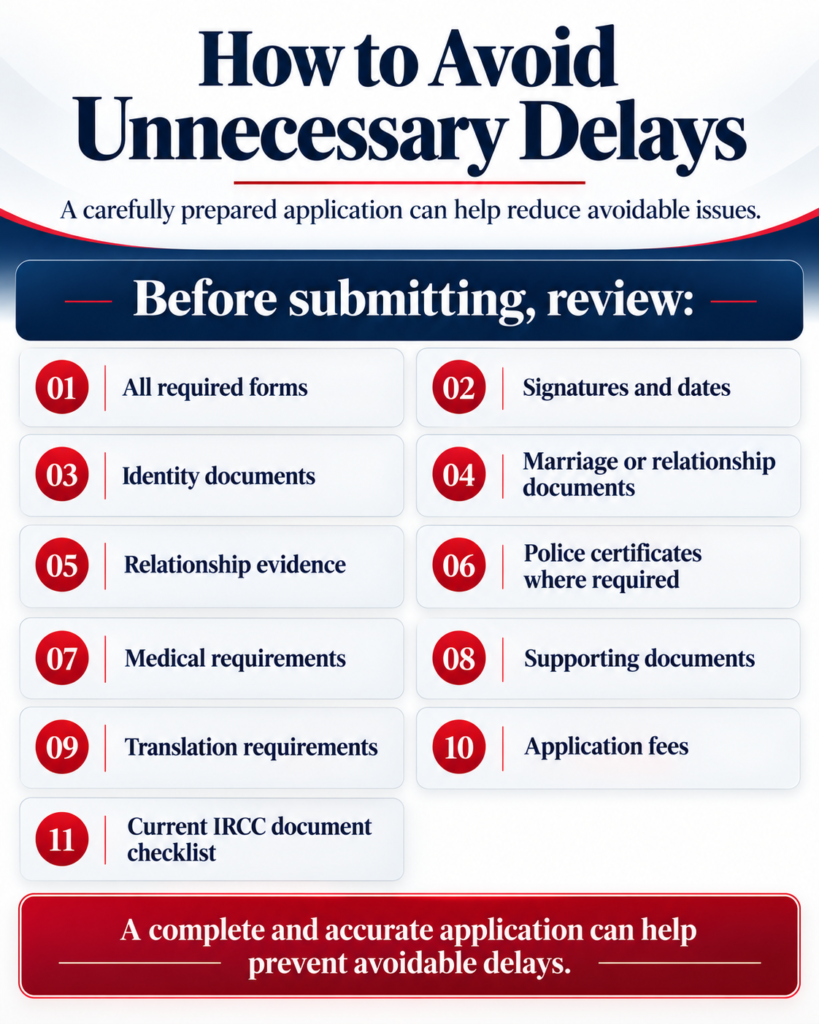
How to Avoid Unnecessary Delays
A carefully prepared application can help reduce avoidable issues.
Before submitting, review:
The documents required can vary depending on the applicant’s circumstances, so applicants should always use the current IRCC checklist and application instructions rather than relying on an old checklist.
Spousal Sponsorship Processing Times 2026: Key Takeaway
For applications outside Quebec, IRCC reported approximately 12.6 months for overseas applications and 14 months for applications processed in Canada as of January 31, 2026.
The difference between the two routes is therefore not simply about which one has a shorter processing-time estimate.
For many couples, factors such as where the spouse currently lives, whether they want to remain together in Canada, work permit eligibility, and travel plans may be more relevant when determining which route fits their circumstances.
Processing times can also change, so applicants should check the latest IRCC processing-time information before submitting their application.
For guidance with your Canada spousal sponsorship application, contact Rajveer Chahal Education Consultant (RCEC).
Phone/WhatsApp: 7068161111 | 7508361111
Frequently Asked Questions
Q1. How long is spousal sponsorship processing in Canada in 2026?
Ans. As of January 31, 2026, IRCC reported approximately 14 months for applications processed in Canada and 12.6 months for overseas applications outside Quebec.
Q2. Is inland or outland sponsorship faster in 2026?
Ans. Current processing-time estimates can change. As of January 31, 2026, the reported figures were approximately 14 months for inland applications and 12.6 months for overseas applications outside Quebec.
Q3. Can an inland-sponsored spouse work in Canada?
Ans. An eligible spouse or common-law partner living in Canada may be able to apply for an open work permit under IRCC’s current rules.
Q4. Can an outland-sponsored spouse visit Canada?
Ans. An outland-sponsored spouse may be able to visit Canada if they meet the requirements for temporary entry. A sponsorship application itself does not guarantee admission.
Q5. Does Quebec have different spousal sponsorship processing times?
Ans. Yes. Quebec-bound applications can have substantially longer processing times than applications destined for other provinces.


