

A Post-Graduation Work Permit (PGWP) allows eligible international students to work in Canada after completing their studies. However, not every graduate qualifies for a PGWP, and an application refusal can create uncertainty about a person’s legal status and future in Canada.
If your PGWP application has been refused, it is important to understand the reason for the decision, check your current immigration status, and consider what options may be available. In some situations, a refusal may also raise concerns about whether you can remain in Canada or whether further immigration action could follow.
This guide explains common PGWP refusal reasons, the possible connection with removal orders, and steps applicants can take after receiving a refusal.
What Is a Post-Graduation Work Permit?
A post-graduation work permit is an open work permit available to eligible international students who have completed an eligible program at a designated learning institution (DLI).
An open work permit generally allows the holder to work for most employers in Canada, subject to the conditions printed on the permit and applicable immigration rules.
A PGWP is not issued automatically to every international graduate. Applicants must meet the eligibility requirements that apply to their studies and application.
These requirements may include:
Graduates should check the rules that apply to their specific program and circumstances before submitting an application.
Why Can a PGWP Application Be Refused?
A PGWP application may be refused if the applicant does not meet one or more requirements. The reason for refusal should be explained in the decision received from the immigration authorities.
1. The Program or Institution Is Not Eligible
Not every Canadian college, institution, or program qualifies for a PGWP.
A student may complete their studies successfully but still be ineligible if their program does not meet the applicable requirements. Eligibility can depend on the institution, program type, program length, and rules in effect when the student studied.
Before applying, graduates should confirm that their particular program qualifies rather than relying only on the institution’s general reputation or advertising.
2. The Application Was Submitted Late
PGWP applications must be submitted within the applicable deadline after completing the program.
If an applicant misses the deadline, their application may be refused. The relevant dates can include when the institution first confirms that the student has completed the program and when the applicant receives final documentation.
Applicants should keep copies of their completion letter, transcript, and application submission confirmation.
3. Language Requirements Were Not Met
Language requirements apply to many PGWP applicants, depending on the rules in force and the applicant’s program.
Applicants may need to provide acceptable language-test results and should confirm that their test is approved, their results are valid, and their scores meet the required level.
IELTS, CELPIP, and PTE Core are English-language tests accepted for Canadian immigration purposes, including eligible PGWP applications. Applicants should check the specific test and score requirements that apply to their application before booking an exam.
If you are preparing for your language test, LinguoPrep can help you practice and prepare for IELTS, CELPIP, and PTE Core with focused test preparation. Visit LinguoPrep to explore preparation resources.
Submitting an expired or unacceptable test result, or failing to meet the required scores, may affect eligibility.
4. Study Status or Program Requirements Were Not Met
PGWP eligibility can depend on meeting specific study requirements. Issues involving part-time studies, breaks in studies, program changes, or the length of the program may affect an application.
Some exceptions may apply, depending on the circumstances. Applicants should not assume that every part-time term or study interruption automatically leads to refusal.
The applicant’s academic records and explanation of any unusual study circumstances may be relevant.
5. Incomplete or Inconsistent Documents
Missing documents, inconsistent dates, or information that does not match the applicant’s academic records may create problems.
Applicants should review their application carefully and ensure that the information provided is accurate. They should also respond to any request for additional documents within the specified deadline.
Providing false or misleading information can have consequences beyond an ordinary application refusal.
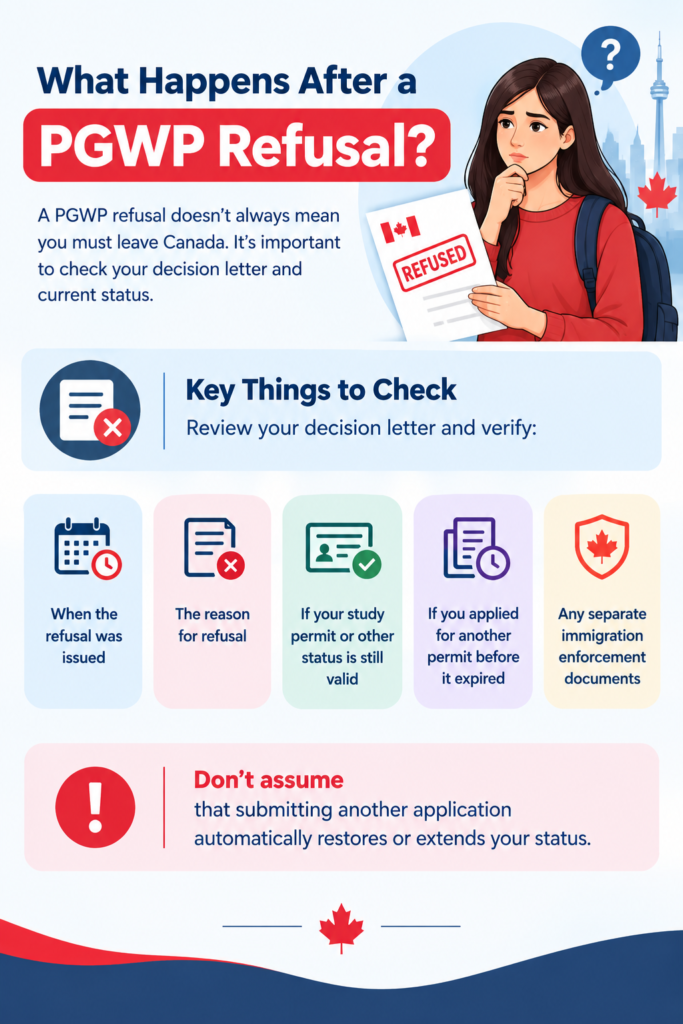
What Happens After a PGWP Refusal?
The consequences of a PGWP refusal depend on the applicant’s circumstances, including their current immigration status and whether they have another valid basis to remain in Canada.
A refusal does not automatically mean that every applicant must leave Canada immediately. However, it is important to check the decision letter and the conditions of any existing permit.
Applicants should review:
Do not assume that submitting another application automatically restores or extends legal status.
Can a PGWP Refusal Lead to a Removal Order?
A PGWP refusal and a removal order are not the same thing.
A PGWP refusal means that the application for a work permit was not approved. A removal order is a separate legal measure that may arise in certain immigration circumstances.
For example, a person who no longer has legal status in Canada may face immigration enforcement action. However, the exact consequences depend on the person’s situation and the applicable legal process.
A refusal alone does not establish that a removal order has been issued.
If you receive a document that refers to a removal order, departure order, exclusion order, or deportation order, read it carefully. The type of order and the deadlines or conditions attached to it matter.
What Should You Do If Your PGWP Is Refused?
Step 1: Read the Refusal Letter
Start by identifying the exact reason for refusal. Avoid relying on assumptions or general information from other applicants.
The refusal letter can help you understand which eligibility requirement was not satisfied and whether the issue concerns documents, program eligibility, timing, or another matter.
Step 2: Check Your Current Immigration Status
Review your current permit and the dates associated with it.
If your previous status has expired, or you are unsure whether you can continue working, seek qualified immigration advice promptly. Do not continue working based only on the belief that another application will be approved.
Step 3: Review Whether Another Application Is Possible
Depending on the refusal reason and your circumstances, you may have options to consider. These could include submitting a new application if you remain eligible, correcting an issue where permitted, or exploring another immigration pathway.
A new application should not simply repeat the same information if the original eligibility problem remains unresolved.
Step 4: Get Advice About Legal Remedies
Some applicants may wish to obtain legal advice about whether the refusal can be challenged. The available options and deadlines depend on the decision and the person’s circumstances.
A legal professional can review the refusal, relevant documents, and applicable deadlines to explain whether a remedy may be available.
Step 5: Respond to Any Enforcement Documents Promptly
If you have received a removal order or another formal immigration enforcement document, do not ignore it.
Check the document for instructions and deadlines. Get qualified legal advice as soon as possible, especially if you are uncertain about your right to remain in Canada or the consequences of leaving.
Documents to Keep Ready
If your PGWP application has been refused, organize the documents relevant to your studies and immigration history.
These may include:
Keep accurate copies and avoid altering official documents.
How to Reduce the Risk of PGWP Problems
Applicants can reduce avoidable errors by checking eligibility before applying and keeping their documents organized.
Confirm that your institution and program meet the applicable PGWP requirements. Review the application deadline and any language requirement that applies to you. Make sure the information in your forms matches your supporting documents.
If your studies included breaks, part-time terms, a program transfer, or other unusual circumstances, understand how those details may affect your eligibility before submitting an application.
Most importantly, do not rely on informal promises that a PGWP is guaranteed. Eligibility depends on the applicable immigration rules and the facts of each case.
Frequently Asked Questions
Q1. Does a PGWP refusal automatically mean I must leave Canada?
Ans. No. A refusal does not automatically mean that a removal order has been issued. Your ability to remain in Canada depends on your current immigration status and circumstances.
Q2. Can I apply for a PGWP again after refusal?
Ans. Possibly. It depends on the refusal reason, whether you still meet the eligibility requirements, and whether you are within the applicable deadline. Review your refusal carefully before considering another application.
Q3. Can I work after my PGWP is refused?
Ans. You should not assume that you can continue working. Your work authorization depends on your current status and the rules that apply to your situation. Check your documents and obtain qualified advice if uncertain.
Q4. Is a PGWP refusal the same as a removal order?
Ans. No. A refusal is a decision on your work permit application. A removal order is a separate legal matter and has its own requirements and consequences.
Q5. What should I do if I receive a removal order?
Ans. Read the document carefully, check any deadlines or instructions, and seek qualified immigration legal advice promptly. The type of order and your circumstances affect the options available.
Canada PR Pathway Guidance with Rajveer Chahal Education Consultancy
Choosing the right immigration pathway is an important step when planning your Canada PR journey. Whether you are exploring Express Entry, the Provincial Nominee Program (PNP), Canadian Experience Class (CEC), or family sponsorship, understanding the eligibility requirements can help you make informed decisions.
Rajveer Chahal Education Consultancy provides guidance to applicants exploring Canadian immigration pathways, including profile assessment, eligibility review, and application documentation support.
Before applying, it is important to understand how your IELTS or CELPIP results, education, work experience, and other qualifications may affect your eligibility and CRS score. Immigration requirements can change, so applicants should review the latest rules for their chosen pathway.
Final Thoughts
A PGWP refusal can be stressful, particularly for graduates who planned to continue working in Canada. The next steps depend on the specific refusal reason, the applicant’s current immigration status, and whether any separate enforcement action has been taken.
Review your refusal letter, organize your documents, and confirm your legal status before making decisions about work or remaining in Canada. If a removal order or deadline is involved, seek qualified advice promptly.
Immigration outcomes depend on individual circumstances, and no application or legal remedy can be guaranteed.