


Canada remains one of the world’s most popular destinations for international students. Its high-quality education system, multicultural environment, and post-graduation opportunities attract hundreds of thousands of students every year.
Unfortunately, the growing popularity of Canada has also led to an increase in education-related fraud. Unsuspecting students sometimes become victims of fake colleges in Canada, fraudulent admission offers, and study visa scams that can cost them thousands of dollars and jeopardize their future.
Understanding how to identify fake colleges in Canada is essential before investing your time, money, and hopes into a study-abroad journey.
At Rajveer Chahal Education Consultant, we believe informed students make safer decisions. This guide explains the warning signs of fraudulent institutions, how to avoid study visa scams in Canada, and how to verify a Canadian college before applying.
Key Insight: Before applying to any Canadian college, students should verify its DLI status, official contact information, accreditation, program details, tuition fees, and physical campus location.
Team Rajveer Chahal
What Are Fake Colleges?
Fake colleges are institutions that falsely present themselves as legitimate educational providers. Some may have websites, admission offices, social-media pages, and marketing materials that appear professional, but they may lack proper authorization, recognition, or approval.
Other institutions may exaggerate job-placement rates, promise guaranteed immigration benefits, or falsely claim government approval.
Students who enroll in such institutions risk:
ALSO READ: Canada Visa Scam Alert: How Agents Fool Students and How to Stay Safe
Why Students Fall for Canada College Scams
Fraudsters often target students who are unfamiliar with Canada’s education system and immigration procedures.
Common reasons students become victims of Canada college scams include:
Scammers know that many students are eager to study abroad and may overlook important warning signs when they receive an attractive offer.
Warning Sign 1: The College Is Not a Designated Learning Institution
One of the most important checks is verifying whether a college is listed as a Designated Learning Institution, commonly known as a DLI.
A DLI is a school approved by a provincial or territorial government to host international students.
If a college is not listed as a DLI, students may face serious study-permit and immigration issues.
What You Should Do
Always verify the institution’s DLI number through official Canadian government resources before submitting an application or paying any fee.
Student Tip: Do not trust a DLI number shown only on an agent’s message or college brochure. Match it with the institution’s official name and campus location on the Government of Canada website.
Team Rajveer Chahal
Warning Sign 2: Guaranteed Admission Claims
Legitimate colleges assess applications based on academic qualifications, language scores, program requirements, available seats, and other eligibility conditions.
Be cautious if an institution or agent promises:
No college, consultant, or education agent can guarantee these outcomes.
Warning Sign 3: Unrealistically Low Tuition Fees
While affordable programs are available, extremely low tuition fees compared with similar institutions should raise concerns.
Fraudulent institutions may use attractive pricing, large discounts, or limited-time offers to pressure students into making quick payments.
Students should compare tuition fees with other recognized colleges in Canada offering similar programs before making a decision.
Warning Sign 4: Poor Website Quality
Many fraudulent institutions have websites that contain obvious warning signs.
These may include:
A professional-looking website alone does not guarantee legitimacy. However, obvious errors and missing information should encourage further investigation.
Warning Sign 5: Lack of Physical Campus Information
Legitimate institutions generally provide detailed and verifiable information about their campuses.
This may include:
If an institution avoids sharing its physical campus information or provides an address that cannot be verified, proceed with caution.
Warning Sign 6: Pressure to Pay Immediately
Fraudulent organizations often create artificial urgency to prevent students from verifying information.
Examples include:
Legitimate institutions generally provide clear payment timelines, official fee schedules, refund policies, and proper invoices.
Never transfer money without independently verifying the institution, payment recipient, invoice details, and official bank account.
Warning Sign 7: Unverified Education Agents
Not all education consultants operate ethically or transparently.
Some unauthorized agents may:
Students should work with reputable consultants who provide transparent information, official documentation, and clear guidance.
How to Verify a Canadian College Before Applying
Students should complete several independent checks before paying an application fee or accepting an admission offer.
1. Check the Institution’s DLI Status
The first step is confirming that the institution and campus appear on Canada’s official DLI list.
Check the exact institution name, campus location, province, and DLI number. Similar names can sometimes create confusion.
2. Verify Accreditation and Recognition
Research whether the institution is recognized or authorized by the relevant provincial or territorial education authorities.
DLI status confirms that an institution can host international students, but students should also research program recognition, educational quality, and career relevance.
3. Review the Official Website
Visit the institution’s official website and verify:
4. Read Student Reviews Carefully
Look for feedback from current and former students across multiple independent platforms.
However, avoid relying solely on reviews because some may be fake, paid, misleading, or based on individual experiences.
5. Contact the Institution Directly
If you have doubts, contact the admissions department directly using the phone number or email address listed on the institution’s official website.
Ask the institution to confirm:
ALSO READ: How to Choose the Right College in Canada
Common Study-Abroad Scams in Canada
Students should also watch for other forms of study abroad fraud in Canada beyond fake colleges.
Fake Admission Letters
Fraudsters may create counterfeit admission letters that appear authentic. These letters may use copied logos, signatures, reference numbers, and institutional details.
Always contact the institution directly to confirm that the offer is genuine.
Scholarship Scams
Be cautious if someone requests money to guarantee a scholarship or claims that a scholarship is available without any eligibility assessment.
Visa Guarantee Schemes
No individual, institution, or organization can guarantee a Canadian study visa.
Study permit decisions are made by Canadian immigration authorities after reviewing the complete application and supporting documents.
Fake Job Offers
Some scammers offer fake employment opportunities to attract international students or collect money and personal information.
Always verify the employer, job location, company website, email address, and employment terms before sharing documents or making a payment.
The Importance of Choosing the Right Institution
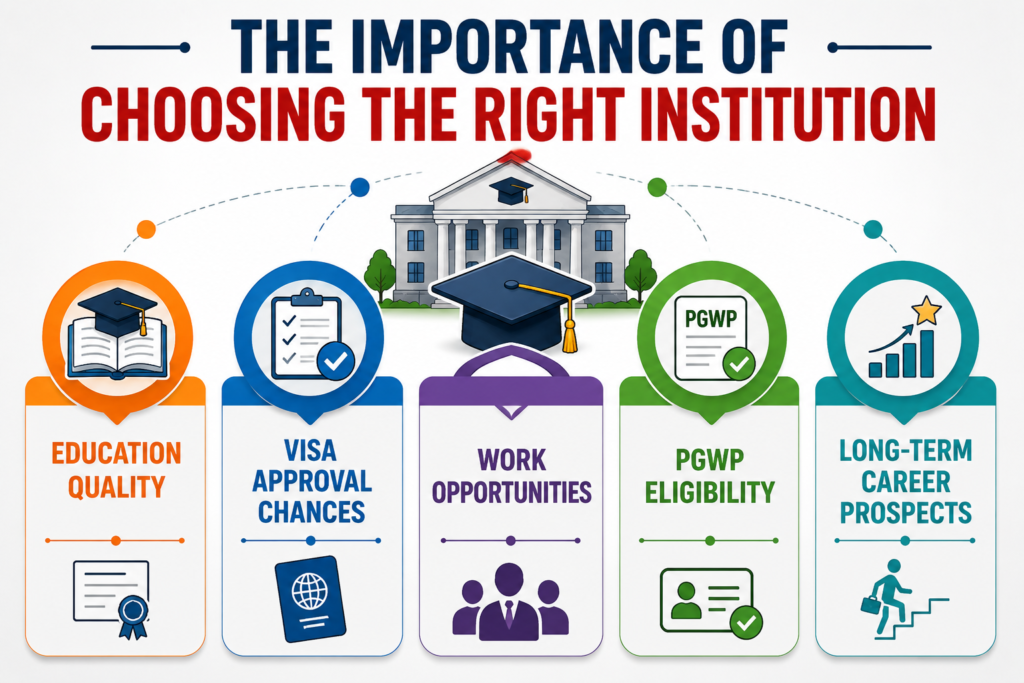
Selecting a legitimate and suitable college can affect:
A poor choice can result in financial loss, poor education, limited career outcomes, and immigration complications.
This is why proper research is essential before applying.
Key Reality: DLI status is essential, but it should not be the only factor. Students must also check the program’s quality, career relevance, campus location, tuition cost, and current PGWP eligibility rules.
Team Rajveer Chahal
How Professional Guidance Helps
Professional guidance can help students:
At Rajveer Chahal Education Consultant, we help students make informed decisions based on official information, transparent processes, and trusted educational pathways.
Final Checklist Before Applying
Before paying any application or tuition fee, ask yourself:
If the answer to any of these questions is “no,” conduct further research before proceeding.
| Warning Sign | Possible Risk | Recommended Action |
|---|---|---|
| Institution is not on the DLI list | Study permit and immigration complications | Verify the institution and campus through official government sources |
| Guaranteed visa or admission | Fraudulent or misleading offer | Avoid guarantees and verify all claims independently |
| Extremely low tuition fees | Financial scam or poor-quality education | Compare fees with similar recognized institutions |
| No physical campus details | Fake or unverified institution | Verify the address, campus, and official contact information |
| Pressure to pay immediately | Loss of money | Request an official invoice and verify the payment account |
| Unverified agent | False documents or misleading advice | Work with a reputable and transparent consultant |
| Fake admission letter | Visa refusal and legal complications | Confirm the offer directly with the institution |
Conclusion
Canada offers outstanding educational opportunities, but students must remain vigilant against fraud. Understanding fake colleges in Canada: how to identify them can protect your finances, education, and future immigration plans.
Always verify DLI status, research institutions thoroughly, compare programs, check current eligibility requirements, and avoid organizations that make unrealistic promises.
A legitimate institution will provide transparency, official documentation, clear admission procedures, proper payment instructions, and verifiable campus information.
When in doubt, seek professional guidance from trusted education consultants who prioritize your long-term success.
Taking a few extra steps today can save you from serious financial, academic, and immigration problems tomorrow.
Final Insight: Never choose a college based only on low fees, fast admission, or immigration promises. Verify every important detail independently before paying money or submitting documents.
Team Rajveer Chahal
Need Help Verifying a Canadian College?
Contact Rajveer Chahal Education Consultant for professional guidance related to college verification, course selection, admission planning, study permits, financial preparation, and safe study-abroad pathways.
Call: 7508361111 or 7068161111
Contact us today for more details and further assistance.
Frequently Asked Questions (FAQs)
1. What is a fake college in Canada?
A fake college is an institution that falsely claims legitimacy, recognition, accreditation, or government approval. It may also misrepresent its programs, campus, job outcomes, or immigration benefits.
2. How can I verify if a Canadian college is legitimate?
Check whether the institution and campus are listed as a Designated Learning Institution. You should also verify its provincial recognition, official website, campus address, program information, tuition fees, and contact details.
3. Can fake colleges affect my study permit?
Yes. Applying with false documents or studying at an unrecognized institution can create serious study permit, work permit, and immigration complications.
4. What is a DLI?
A Designated Learning Institution is a school approved by a provincial or territorial government to host international students.
5. Are all private colleges in Canada fake?
No. Many private colleges are legitimate. However, students should verify their DLI status, provincial authorization, program quality, career relevance, and current PGWP eligibility before applying.
6. Can a college guarantee a Canadian study visa?
No. Only Canadian immigration authorities can decide study permit applications. No college, consultant, or agent can guarantee approval.
7. How can I avoid education scams in Canada?
Research institutions thoroughly, verify DLI status, confirm admission offers directly, compare tuition fees, avoid unrealistic promises, and make payments only through verified official channels.
8. What should I do if an agent pressures me to pay quickly?
Do not make an immediate payment. Request official documents, verify the institution independently, confirm the payment account, and seek a second professional opinion.
9. Can fake admission letters be detected?
Yes. Canadian authorities and educational institutions can verify admission documents. Students should confirm every admission letter directly with the institution before using it in an application.
10. How can Rajveer Chahal Education Consultant help?
Rajveer Chahal Education Consultant helps students verify institutions, compare suitable programs, understand admission requirements, avoid scams, prepare accurate applications, and make informed study-abroad decisions.