

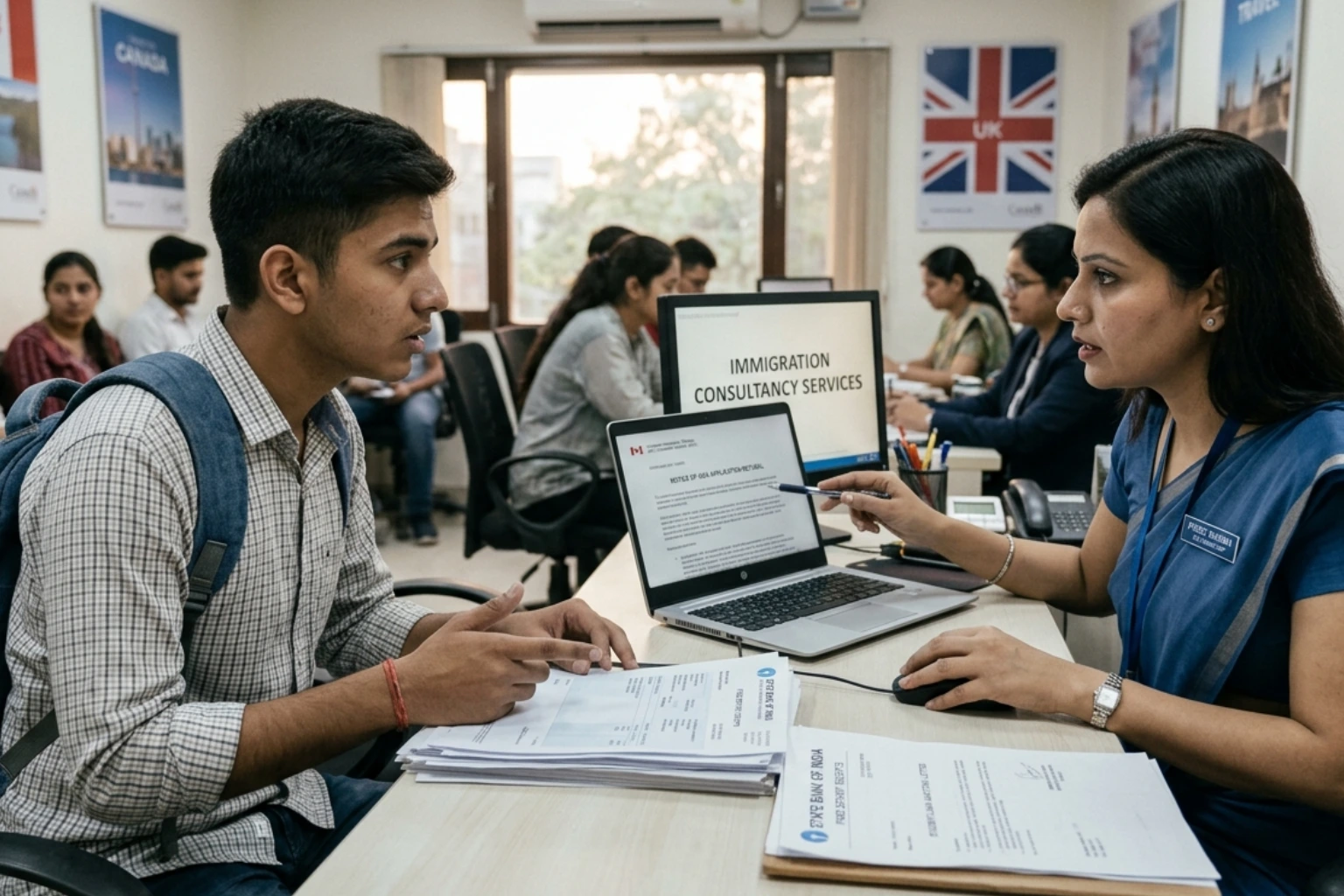
A Canada study visa rejection can happen even when applicants show strong financial proof. Many students assume that a high bank balance or solid funding guarantees approval, but that is not how visa decisions work.
In reality, Canada study visa rejection reasons often go beyond finances. Visa officers evaluate your complete profile, including your study intent, documents, and long-term plans.
Key Insight: A Canada study visa rejection is usually not about money alone. It is about whether your application clearly proves that you are a genuine student with a well-defined study plan.Team Rajveer Chahal
1. Lack of Genuine Study Intent
One of the biggest Canada study visa rejection reasons is unclear or weak study intent. Even with strong financials, if your application suggests that your primary goal is immigration rather than education, it raises serious concerns.
Visa officers carefully review whether your chosen course aligns with your academic background and career path. If there is a mismatch without proper explanation, it often leads to study visa rejection in Canada.
2. Weak Statement of Purpose (SOP)
Your Statement of Purpose is one of the most important documents in your application. A poorly written or generic SOP is a common reason for Canada student visa refusal.
If your SOP does not clearly explain why you chose the course, institution, and country, it creates doubt. Even with strong financial proof, a weak SOP can result in a Canada study visa rejection.
3. Unclear Career Progression
Another major reason for study permit rejection in Canada is lack of clear career direction. Your course must make sense based on your previous education or work experience.
For example, applying for a lower-level program after completing a higher degree without justification can raise red flags and lead to visa rejection.
4. Inconsistent or Incomplete Documentation
Many Canada study visa rejection cases happen due to documentation issues. Even if your financial documents are strong, inconsistencies in other areas can impact your application.
This includes mismatched information, missing details, or unclear sources of funds. Visa officers verify every document carefully, and any discrepancy can lead to refusal.
5. Weak Ties to Home Country
Showing strong ties to your home country is essential to avoid Canada student visa refusal. Applicants must convince the visa officer that they will return after completing their studies.
If your application does not clearly demonstrate family ties, career opportunities, or future plans in your home country, it can result in a Canada study visa rejection.
6. Poor Course or Institution Choice
Choosing the wrong course or institution is another overlooked reason behind Canada study visa rejection. Your study plan must appear logical and relevant to your future goals.
If the course does not add value to your profile or seems unrelated, visa officers may question your intent and refuse the application.
7. Overdependence on Financial Strength
Many applicants believe that strong financial proof alone is enough to secure approval. This is one of the most common mistakes leading to Canada study visa rejection.
A successful application requires balance. Along with finances, your SOP, academic background, and overall profile must support your case.
Common Canada Study Visa Rejection Mistakes
- Submitting a generic SOP without a clear study plan or career goals.
- Choosing a course that does not match your academic or professional background.
- Providing inconsistent or unclear documentation.
- Failing to demonstrate strong ties to your home country.
How to Avoid Canada Study Visa Rejection
- Write a clear and personalized SOP explaining your study and career plans.
- Select a course that aligns with your previous education and future goals.
- Ensure all documents are consistent, accurate, and complete.
- Clearly show your intent to return to your home country after studies.
Final Insight
A Canada study visa rejection does not mean your financials are weak. It usually means your overall application did not clearly justify your intent and plans.
To improve your chances, focus on building a strong, well-balanced profile rather than relying only on financial proof.
Strong financials support your application, but clarity, intent, and consistency are what ultimately prevent a Canada study visa rejection.Team Rajveer Chahal