


Canada continues to be one of the most popular destinations for international students, but the country’s approach to international education has become more controlled. The Canada study permit cap 2026 is an important development for students planning to study at Canadian colleges and universities.
The study permit cap is designed to help manage the number of international students entering Canada while ensuring that provinces, territories, and educational institutions can properly accommodate students. Because of these changes, students need to understand the current Canada study permit requirements, Provincial Attestation Letter or Territorial Attestation Letter rules, designated learning institution requirements, and application process before submitting their application.
If you are planning to study in Canada in 2026, preparing early and choosing the right academic pathway can make your application more organized and effective.
What Is the Canada Study Permit Cap?
The Canada study permit cap is part of the Canadian government’s approach to managing the growth of international students.
Under the current system, the federal government works with provinces and territories to manage study permit application volumes. Provinces and territories receive allocations and determine how available spaces are distributed among eligible educational institutions.
This means international students should not assume that simply receiving admission from a Canadian college or university automatically means they will receive a study permit.
Students may need to meet additional requirements before they can submit their Canada student visa application, including obtaining the appropriate provincial or territorial attestation where applicable.
How Does the Study Permit Cap Affect International Students?
The study permit cap mainly affects students who require a Provincial Attestation Letter or Territorial Attestation Letter.
The system means that students need to consider more than just admission to a Canadian institution. They should also understand whether their program is subject to the attestation requirement and how the institution handles the process.
This makes early planning particularly important.
A student should ideally consider the following before applying:
- Choosing the right designated learning institution
- Selecting a suitable academic program
- Understanding PAL or TAL requirements
- Preparing financial documentation
- Checking study permit eligibility
- Preparing a strong study plan
- Reviewing current immigration requirements
- Ensuring all documents are accurate and consistent
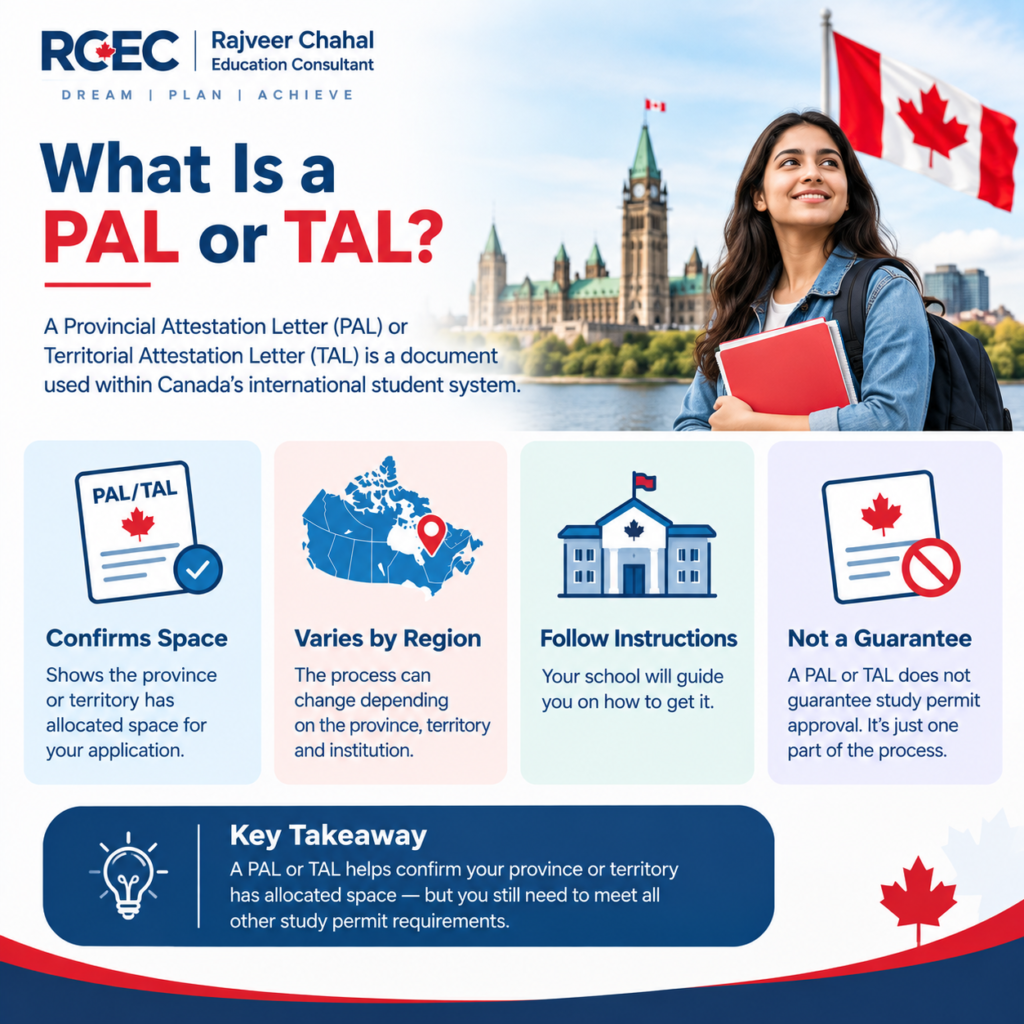
What Is a PAL or TAL?
A Provincial Attestation Letter (PAL) or Territorial Attestation Letter (TAL) is a document used within Canada’s international student system.
For students who require one, the PAL or TAL confirms that the province or territory has allocated space for the student’s study permit application.
The process for obtaining the letter can vary depending on the province, territory and educational institution. Students should therefore follow the instructions provided by their institution.
A PAL or TAL does not guarantee study permit approval. It is one part of the overall study permit process.
Who May Be Exempt From PAL or TAL Requirements?
Not every international student is subject to the PAL or TAL requirement.
Certain categories of students can be exempt depending on their circumstances. This includes some students entering eligible graduate-level programs at public institutions, as well as certain primary and secondary school students and other specific categories.
Because exemptions depend on the applicant’s individual circumstances and program, students should confirm their eligibility before assuming that they do not need an attestation letter.
How to Improve Your Chances of Getting a Canada Study Permit
There is no guaranteed method for obtaining a Canada study permit. However, students can make their applications stronger by preparing carefully and ensuring that their information is genuine, consistent and well supported.
Choose a Relevant Study Program
Program selection is an important part of a study permit application.
Your selected course should make sense in relation to your previous education, professional experience and future career objectives.
A clear connection between your academic background and proposed studies can help demonstrate that you have a genuine purpose for studying in Canada.
Select the Right DLI
Students must carefully check whether their chosen institution is a Designated Learning Institution (DLI).
Being admitted to a Canadian institution is not the only consideration. Students should also research their program, location, tuition, academic reputation and potential post-study opportunities.
Students interested in working in Canada after graduation should also check whether their specific program meets the applicable Post-Graduation Work Permit (PGWP) requirements.
Prepare a Strong Study Plan
A study plan should clearly explain why you want to study in Canada and how the selected program fits your educational and career goals.
Your explanation should be logical and consistent with your background.
A strong study plan can address:
- Your previous education
- Your professional experience
- Why you selected the particular program
- Why you selected Canada
- Why you selected the institution
- How the program supports your career plans
- Your plans after completing your studies
Avoid using generic statements that could apply to any student or any program.
Demonstrate Financial Capacity
Financial preparation is another important part of a Canada student visa application.
Applicants need to demonstrate that they have sufficient funds to support their studies and living expenses in Canada according to the applicable immigration requirements.
Financial documentation should be genuine, understandable and consistent with the applicant’s overall circumstances.
Depending on the situation, supporting evidence may include bank records, education loans, scholarship documentation, income evidence or financial support from an eligible sponsor.
Keep Your Documents Consistent
All information provided in your application should be accurate and consistent.
Your educational documents, financial information, employment history, study plan and application forms should tell the same overall story.
Any unexplained contradictions can create concerns during the assessment of your application.
Does Applying Early Help Under the Study Permit Cap?
Planning early is strongly recommended.
Students who begin the process early have more time to research institutions, complete admission requirements, arrange required documents and understand whether a PAL or TAL applies to their situation.
Early preparation does not guarantee approval, but it can reduce the risk of missing important deadlines or making rushed decisions.
Students should avoid waiting until the last moment to begin their Canada study permit application.
Common Mistakes Students Should Avoid
Choosing a Program Only for Immigration
Selecting a program simply because you believe it will provide an easier immigration pathway can create questions about your genuine study purpose.
Your program should have a logical connection to your academic and career objectives.
Ignoring PAL or TAL Requirements
Students should determine whether they require a Provincial Attestation Letter or Territorial Attestation Letter before preparing their study permit application.
Selecting an Institution Without Checking Program Eligibility
Students should not assume that every program offered by a Canadian institution provides the same post-study opportunities.
Always check the latest official information about the institution and program.
Providing Weak Financial Evidence
Financial documents should clearly support your ability to fund your education and stay in Canada.
Unclear or inconsistent financial information can weaken an application.
Using a Generic Study Plan
A study plan should be personalized to your own educational background and future goals.
Avoid copying templates or using explanations that do not accurately reflect your circumstances.
Relying on Outdated Immigration Information
Canadian immigration policies can change.
Information about study permits, PAL or TAL requirements, work rights, PGWP eligibility, and international students should always be checked against current official requirements.
Canada Study Permit Cap and Indian Students
Canada remains an important study destination for students from India, but Indian applicants should pay particular attention to the quality and consistency of their applications.
Students should focus on choosing a relevant program, selecting an appropriate institution, and demonstrating a genuine academic purpose.
A well-prepared application should clearly connect the student’s education, chosen program, financial circumstances, and future career plans.
Students should also be careful when relying on social media posts or unofficial claims about Canadian immigration rules. Requirements can change, and information that was correct previously may no longer apply.
Canada Study Permit Checklist
Before submitting your application, make sure you have carefully reviewed:
- Admission requirements
- Letter of Acceptance
- DLI status
- PAL or TAL requirements
- Program eligibility
- Financial documentation
- Academic records
- Language requirements where applicable
- Study plan
- Passport and identity documents
- Immigration forms
- Biometrics requirements
- Additional documents requested by IRCC
A final document review can help identify missing or inconsistent information before submission.
Frequently Asked Questions About the Study Permit Cap 2026
Q1. Is Canada still accepting international students in 2026?
Ans. Yes. Canada continues to accept international students, but the country has introduced measures to manage international student numbers and study permit applications.
Q2. Does the study permit cap mean students cannot study in Canada?
Ans. No. The study permit cap does not mean that Canada has stopped accepting international students. Eligible students can continue applying for study permits while following the applicable requirements.
Q3. Does every student need a PAL or TAL?
Ans. No. PAL or TAL requirements depend on the student’s circumstances, program, and other applicable exemptions.
Q4. Does a PAL guarantee study permit approval?
Ans. No. A PAL or TAL is only one part of the study permit process. Applicants must still meet Canada’s study permit requirements and satisfy the immigration officer assessing their application.
Q5. Can I choose any Canadian college or university?
Ans. Students should choose a designated learning institution and carefully check whether their selected program meets their academic and career objectives. Students should also review current PGWP eligibility if post-graduation work opportunities are important to them.
Q6. Does applying early guarantee Canada study permit approval?
Ans. No. Applying early can help with planning and deadlines, but approval depends on whether the applicant meets the applicable requirements and whether the application is satisfactory to the immigration officer.
Q7. What is the most important part of a Canada study permit application?
Ans. There is no single document that guarantees approval. A successful application generally requires a combination of appropriate program selection, genuine study purpose, financial capacity, complete documentation, and compliance with immigration requirements.
Q8. Can I work in Canada while studying?
Ans. Eligible international students may be able to work while studying, subject to the conditions of their study permit and the rules in force at the time. Students should check the latest IRCC requirements before relying on work income as part of their financial planning.
Q9. Can international students get a PGWP after graduation?
Ans. Some graduates may qualify for a post-graduation work permit, but eligibility depends on factors such as the institution, program, credential, and applicable rules. Students should check current PGWP requirements before choosing their program.
Final Thoughts
The Canada study permit cap 2026 has made careful planning increasingly important for international students.
Students should not focus only on securing admission. They should understand the complete process, including DLI selection, program eligibility, PAL or TAL requirements, financial preparation, and study permit documentation.
The strongest approach is to prepare a genuine and well-organized application that clearly explains your academic plans and demonstrates your ability to study and support yourself in Canada.
If you are planning to study in Canada in 2026, start researching your program and institution early and always verify the latest requirements through official Canadian immigration sources before submitting your application.
Need help securing your Canada study permit?
Rajveer Chahal Education Consultant can help with university and college selection, PAL guidance, SOP preparation, financial documentation, application submission, and Canada student visa support.
Call: 7508361111 or 7068161111
Contact us today for guidance with your Canada study permit application.


