

A spouse visa refusal in Canada can be stressful for couples who want to live together and build their future. Whether you are sponsoring your spouse for permanent residence or applying for a spouse visitor visa or open work permit, a refusal can leave you uncertain about what to do next.
The good news is that a refusal does not always mean the end of your immigration journey. Depending on the application type and refusal reasons, you may be able to submit a stronger application, appeal the decision, or explore judicial review.
In this guide, we explain the common reasons for a Canada spouse visa refusal, how to understand the refusal letter, which appeal options may be available, and how to prepare for your next step.
What Is a Spouse Visa Refusal in Canada?
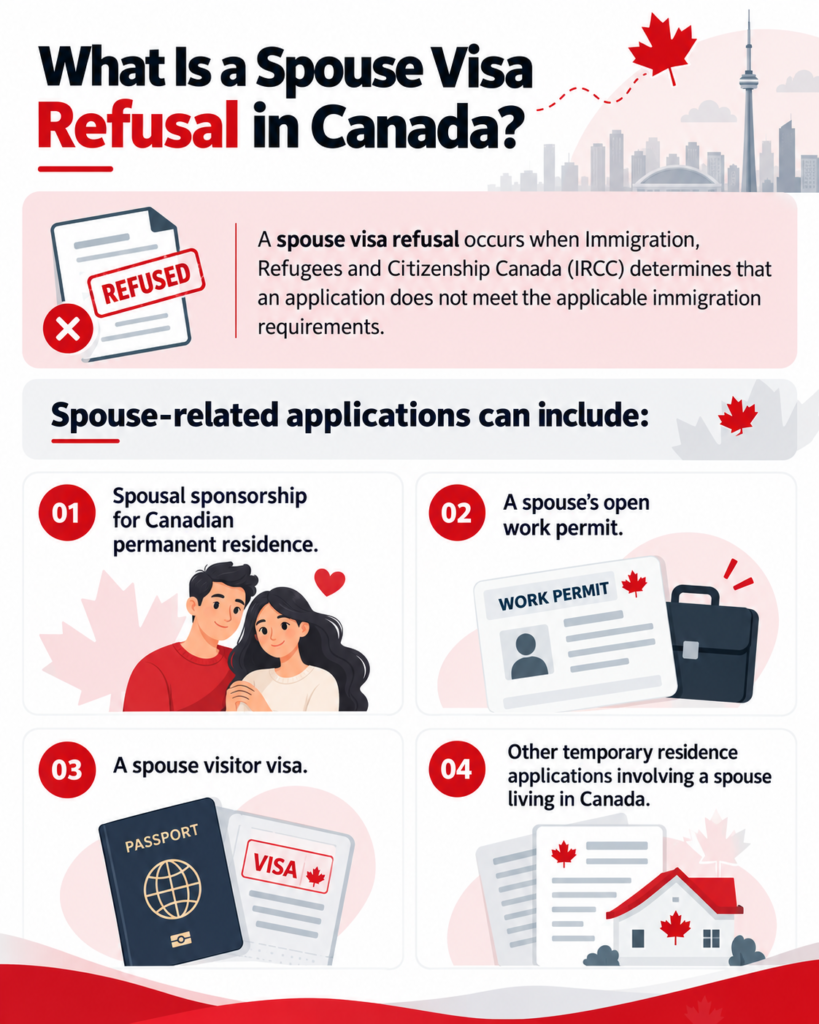
A spouse visa refusal occurs when Immigration, Refugees and Citizenship Canada (IRCC) determines that an application does not meet the applicable immigration requirements.
Spouse-related applications can include:
Each category has different eligibility requirements and legal procedures. For example, an eligible sponsor may appeal certain permanent residence sponsorship refusals to the Immigration Appeal Division (IAD). A visitor visa or work permit refusal generally does not have the same formal appeal option.
Therefore, the first step after a refusal is to identify the application type and understand the specific reasons given by the immigration officer.
Common Reasons for Spouse Visa Refusal in Canada
1. The Relationship Is Not Considered Genuine
One of the most important reasons for refusing a spousal sponsorship application is doubt about whether the relationship is genuine.
Canadian immigration law allows officers to assess whether a relationship was entered into primarily for immigration purposes or is not genuine. If the officer has concerns about the couple’s relationship, the application may be refused.
Possible concerns include limited evidence of communication, inconsistencies in the relationship history, or insufficient information about how the couple met and developed their relationship.
Applicants can provide relevant evidence, such as marriage certificates, photographs, travel records, communication history, joint financial commitments, and statements from family members who know the couple.
The evidence should present a consistent and truthful picture of the relationship. No single document guarantees approval.
2. Inconsistent Information in Application Documents
Incorrect dates, conflicting personal information, or inconsistencies between forms and supporting documents can raise concerns.
For example, an application may contain different dates for when the couple met, when they married, or when they began living together. Inconsistent information about employment, addresses, or previous immigration applications may also require clarification.
Before submitting an application or reapplying after a refusal, review all documents carefully.
If an error occurred, explain it honestly and provide supporting evidence where possible. Never alter documents or provide misleading information to make an application appear stronger.
3. Insufficient Relationship Evidence
A marriage certificate establishes that a marriage took place, but it may not address every question an immigration officer has about the relationship.
Depending on the circumstances, applicants may need to provide additional evidence demonstrating the history and continuity of their relationship.
Examples include
The most useful evidence is relevant to the officer’s concerns and accurately reflects the couple’s circumstances.
4. Concerns About Marriage Validity
An officer may raise concerns about whether the marriage is legally valid or whether the submitted documents establish the marriage adequately.
This can happen when records are incomplete, information conflicts across documents, or clarification is needed about the legal requirements in the country where the marriage took place.
Applicants should provide genuine marriage records and any additional documents needed to establish the marriage’s validity.
If the refusal letter specifically identifies this issue, the response should address it directly rather than relying only on general relationship evidence.
5. Failure to Meet Visa Eligibility Requirements
Not every spouse visa refusal is related to whether a relationship is genuine.
For example, a spouse visitor visa application may raise concerns about the purpose of the visit, financial circumstances, or whether the applicant meets the requirements for temporary residence.
A spouse of an open work permit applicant must meet the applicable work permit eligibility rules in effect at the time of application.
Permanent residence sponsorship applications involve a different set of requirements concerning the sponsor, the sponsored person, and their relationship.
Understanding the category-specific refusal reasons is essential before deciding whether to appeal or reapply.
What to Do After a Canada Spouse Visa Refusal
Receiving a refusal letter can be disappointing, but taking the right steps can help you understand your options.
Step 1: Read the Refusal Letter Carefully
Start by reviewing the refusal letter and identifying each reason the officer provided.
Determine whether the decision concerns relationship genuineness, missing documents, eligibility requirements, inconsistencies, or another issue.
Avoid submitting a new application without first understanding the original decision. A successful response should address the actual concerns raised by IRCC.
Step 2: Review the Officer’s Decision Notes
Where available, officer decision notes can provide additional information about the reasoning behind a refusal.
These notes may help clarify which documents were considered and why the officer was not satisfied that the requirements were met.
Compare the notes with your submitted application and identify any gaps or misunderstandings that need to be addressed.
Step 3: Choose the Appropriate Legal Option
Your available options depend on the type of application refused.
An eligible sponsor may appeal certain spousal sponsorship refusals involving permanent residence to the Immigration Appeal Division.
For visitor visa and work permit refusals, a new application or judicial review may be possible, depending on the circumstances.
Judicial review is a legal process for challenging a decision on reviewable grounds. It is not simply a second application, and permission from the Federal Court is generally required.
Consider obtaining advice from a qualified immigration professional or Canadian immigration lawyer before choosing your next step.
Step 4: Gather Relevant Supporting Documents
Collect evidence that directly addresses the refusal reasons. If the officer questioned the relationship, provide relevant relationship records and clear explanations.
If the refusal involved missing eligibility documents, review the requirements for the specific immigration category and gather the appropriate evidence.
Keep all information accurate and consistent. Additional documents are most useful when they address a specific concern rather than simply increasing the size of the application.
How to Appeal a Spousal Sponsorship Refusal in Canada
Certain permanent residence sponsorship refusals can be appealed to the Immigration Appeal Division of the Immigration and Refugee Board of Canada.
Generally, the Canadian citizen or permanent resident who sponsored the family member may have the right to appeal. However, not every refusal is appealable, and specific legal restrictions can apply.
Step 1: Check Your Appeal Eligibility
Confirm that the decision concerns an appealable permanent residence sponsorship application.
A spouse visitor visa refusal or open work permit refusal generally cannot be appealed through the IAD’s sponsorship appeal process.
Check the official IRB guidance to determine whether an appeal is available in your circumstances.
Step 2: File the Notice of Appeal
Eligible sponsors generally must submit the required Notice of Appeal and supporting documents within 30 days of receiving the refusal decision.
The required documents and filing instructions should be checked against the current official guidance. Keep copies of your submission and proof of filing.
Step 3: Prepare Evidence for the Appeal
Review the refusal reasons and organize evidence that responds to each relevant concern.
Depending on the case, this may include marriage records, communication history, travel documents, photographs, evidence of financial support, and statements from people who know the couple.
If the officer identified inconsistencies, provide a truthful explanation supported by reliable documents where possible.
Step 4: Prepare for the Appeal Process
Depending on the circumstances, the IAD may offer an alternative dispute resolution process or schedule a hearing.
The sponsor and spouse may need to explain their relationship history, communication, family circumstances, and plans for their future.
All statements should be truthful and consistent with the evidence submitted.
Step 5: Understand the Outcome
If an appeal is allowed, IRCC resumes processing the permanent residence visa application. This does not automatically mean that permanent residence is granted immediately.
If the appeal is dismissed, the refusal remains in place, although further legal options may be available in some circumstances.
Can You Reapply After a Spouse Visa Refusal?
Reapplying may be possible, but the best approach depends on the refusal reasons and application category.
For temporary residence applications, a new application may be worth considering when you have new information, changed circumstances, or evidence that directly addresses the previous refusal.
For example, if the original application lacked important supporting documents, a more complete application may help address that concern. If the officer identified conflicting information, explain and correct the issue where appropriate.
For a permanent residence sponsorship refusal, first determine whether an appeal is available and whether reapplying is the appropriate option.
Submitting the same application without addressing the original concerns may lead to another refusal.
How to Reduce the Risk of Another Refusal
Although no one can guarantee approval, careful preparation can help reduce avoidable mistakes.
Provide consistent information: Check dates, names, addresses, and relationship details across all forms and documents.
Submit relevant relationship evidence: Include genuine records that demonstrate the development and continuity of your relationship.
Address previous refusal reasons: If you reapply, explain how the new application responds to the officer’s concerns.
Follow the correct checklist: Review the requirements for your specific visa or sponsorship category.
Explain unusual circumstances: If you have spent long periods apart or had limited opportunities to meet, provide an accurate explanation and supporting evidence where available.
Respect legal deadlines: Appeal and judicial review deadlines can be strict. Confirm the applicable time limit promptly after receiving a refusal.
For expert guidance on your Canada spouse visa refusal, appeal options, and reapplication, consult Rajveer Chahal Education Consultant for personalized immigration assistance.
Final Thoughts
A Canada spouse visa refusal does not always mean that you have no further options. The next step is to understand the refusal reasons, review the available evidence, and determine whether an appeal, reapplication, or judicial review is appropriate.
Eligible sponsors may appeal certain permanent residence sponsorship refusals to the Immigration Appeal Division, while temporary visitor visa and work permit refusals follow different procedures.
Every case depends on its individual facts. Review the official immigration guidance and consider qualified legal advice before deciding how to proceed.
Frequently Asked Questions
Q1. Why is a spouse visa refused in Canada?
Ans. Common reasons include concerns about relationship genuineness, inconsistent information, insufficient supporting documents, marriage validity, and failure to meet the relevant visa eligibility requirements.
Q2. Can I appeal a Canada spouse visa refusal?
Ans. An eligible sponsor may appeal certain permanent residence sponsorship refusals to the IAD. Visitor visa and work permit refusals generally do not have the same formal appeal option.
Q3. What is the deadline for a spousal sponsorship appeal?
Ans. The general deadline is 30 days after receiving the refusal decision. Check the official IAD instructions to confirm the requirements applicable to your case.
Q4. Can I reapply after my spouse’s visa is refused?
Ans. Reapplication may be possible, depending on your circumstances and application type. Address the previous refusal reasons before submitting another application.
Q5. Does winning a sponsorship appeal guarantee permanent residence?
Ans. No. If the appeal is allowed, IRCC resumes processing the permanent residence visa application, which must still proceed through the applicable requirements.


