

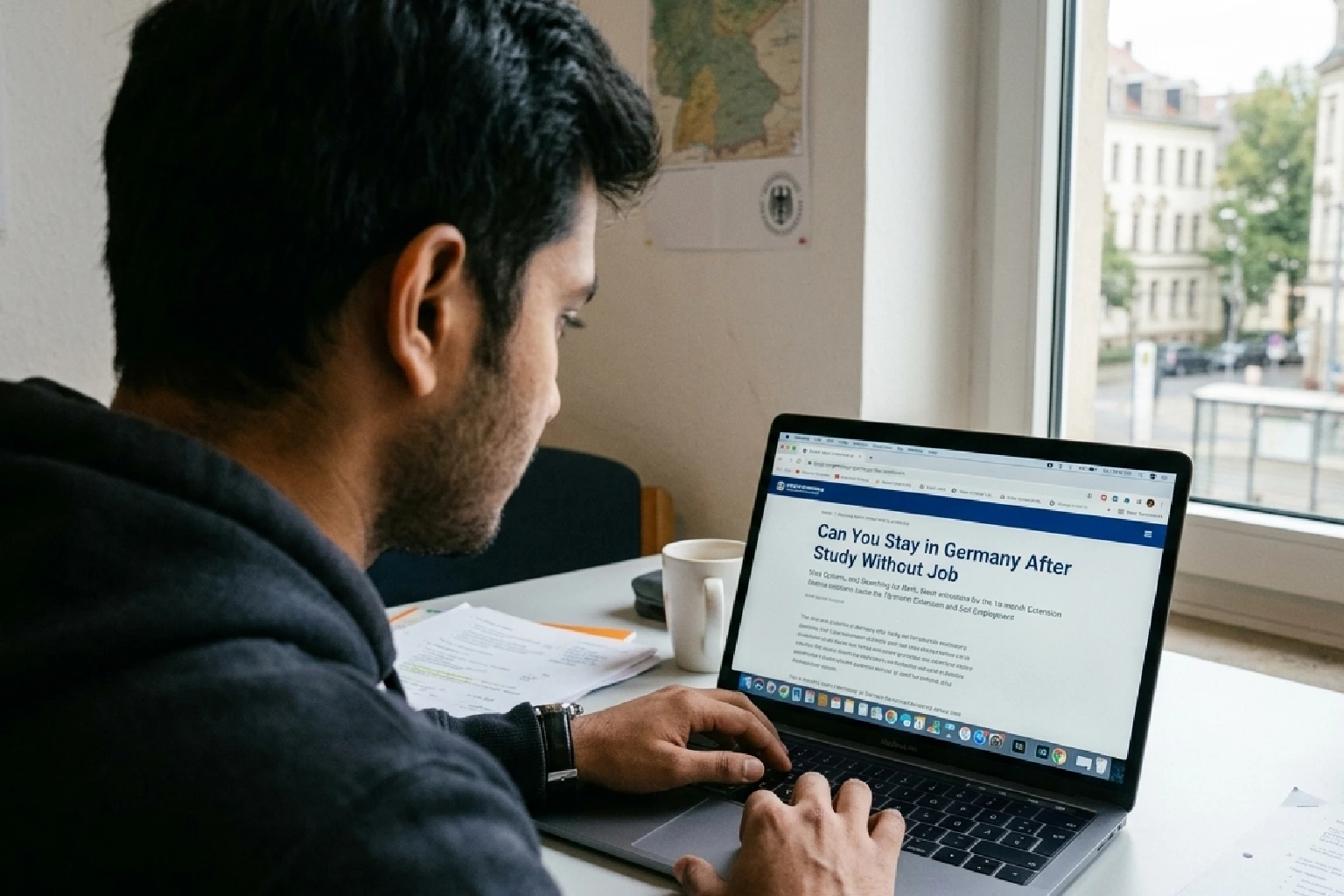
Many international students in Germany ask the same question after graduation: can you stay in Germany without a job? The answer is yes—but only for a limited time and under specific conditions.
Germany offers a structured pathway for graduates to remain in the country and search for employment, but it is not an open-ended stay. Understanding the rules can help you avoid visa issues and plan your next steps effectively.
Key Insight: Germany allows international graduates to stay for up to 18 months after completing their studies to find a job—but staying beyond that requires employment or a valid residence permit.Team Rajveer Chahal
Post-Study Stay in Germany: What Are Your Options?
After completing your degree from a recognized German university, you can apply for a post-study job search residence permit. This permit allows you to stay in Germany while looking for a job related to your field of study.
This is the main legal way to remain in Germany without a job immediately after graduation.
How Long Can You Stay Without a Job?
You can stay in Germany for up to 18 months after completing your studies under the job search visa.
- The 18-month period starts from the date you receive your final results or graduation confirmation.
- During this time, you are allowed to work in any job to support yourself, not just skilled roles.
- Your primary goal during this period must be to secure a full-time job related to your qualification.
This period gives you flexibility, but it is not extendable beyond the allowed duration.
What Happens If You Don’t Find a Job?
If you are unable to secure a relevant job within the 18-month period, you cannot continue staying in Germany under the same permit.
- You will generally need to leave Germany once your job search visa expires.
- You may reapply later from your home country if you secure a job offer.
- Overstaying or staying without valid status can affect your future visa applications.
This is why planning early and actively searching for jobs is critical.
Can You Switch to Another Visa Without a Job?
Switching to another residence permit without a job is limited and depends on your situation.
- You may enroll in further studies and apply for a new student residence permit.
- In some cases, you can start a business and apply for a self-employment visa, but this requires strong financial and business justification.
- Other visa options without employment are very limited and rarely approved.
For most students, securing a job remains the most practical pathway to stay longer.
Best Pathway to Stay in Germany Long-Term
The most reliable way to continue staying in Germany after graduation is by getting a skilled job and converting your status.
- Apply for an EU Blue Card if your salary meets the required threshold.
- Switch to a German work permit for qualified professionals.
- After working for a few years, you may become eligible for permanent residence.
These pathways offer stability and long-term settlement options.
Common Mistakes Students Make
- Waiting too long to start job applications after graduation.
- Relying only on one job type instead of applying broadly.
- Not improving German language skills, which limits opportunities.
- Misunderstanding visa rules and assuming the stay period can be extended.
A proactive approach significantly increases your chances of success.
Final Insight
You can stay in Germany after study without a job—but only temporarily under the job search permit. The real goal during this time is to secure employment that allows you to transition to a long-term visa.
Plan early, stay proactive, and focus on securing a skilled job within the 18-month window. This is the key to building a long-term future in Germany.Team Rajveer Chahal