

Applying for a spouse visa in Canada can already feel stressful, but receiving a Canada Spouse Visa PFL Letter often creates panic among applicants. Many people immediately assume their application will be rejected. However, that is not always true. A Procedural Fairness Letter (PFL) is actually an opportunity given by IRCC to explain concerns before a final decision is made.
Let’s look at a real-life scenario. Amandeep applied for his wife’s Canadian spouse sponsorship after she moved to Canada as an international student. After months of waiting, he suddenly received an email from IRCC mentioning doubts about the genuineness of the marriage and insufficient financial explanation.
The couple became anxious, thinking the visa was already refused. Instead of reacting emotionally, they carefully prepared supporting documents, added relationship proof, financial clarification, photographs, call records, and a detailed explanation letter. A few weeks later, Amandeep’s spouse visa was approved.
This is exactly why understanding a Canada Spouse Visa PFL Letter is important in 2026. This blog by Rajveer Chahal Education Consultant, will discuss the same. Continue reading!
To Watch Video Click Here
What Is a Canada Spouse Visa PFL Letter?
A Canada Spouse Visa PFL Letter is an official notice sent by IRCC (Immigration, Refugees and Citizenship Canada) when an immigration officer has concerns about your application.
The purpose of the letter is simple:
IRCC gives applicants a fair chance to respond before making a final refusal decision.
The letter usually mentions:
- Concerns about relationship genuineness
- Missing or inconsistent documents
- Financial doubts
- Misrepresentation concerns
- Travel history issues
- Marriage timeline concerns
- Insufficient proof of communication or cohabitation
Receiving a Canada Spouse Visa PFL Letter does not mean automatic refusal. It means IRCC wants clarification.
Why Are PFL Letters Increasing in 2026?
In 2026, Canada has increased scrutiny on temporary resident visas and spouse sponsorship applications due to rising immigration volumes and fraudulent marriage concerns.
As a result, officers are paying close attention to:
- Relationship timelines
- Age gaps
- Cultural differences
- Quick marriages
- Financial dependency
- Lack of meeting history
- Inconsistent information across documents
This is why applicants under Canada spouse sponsorship 2026 must prepare strong documentation from the beginning.
Common Reasons for a Canada Spouse Visa PFL Letter
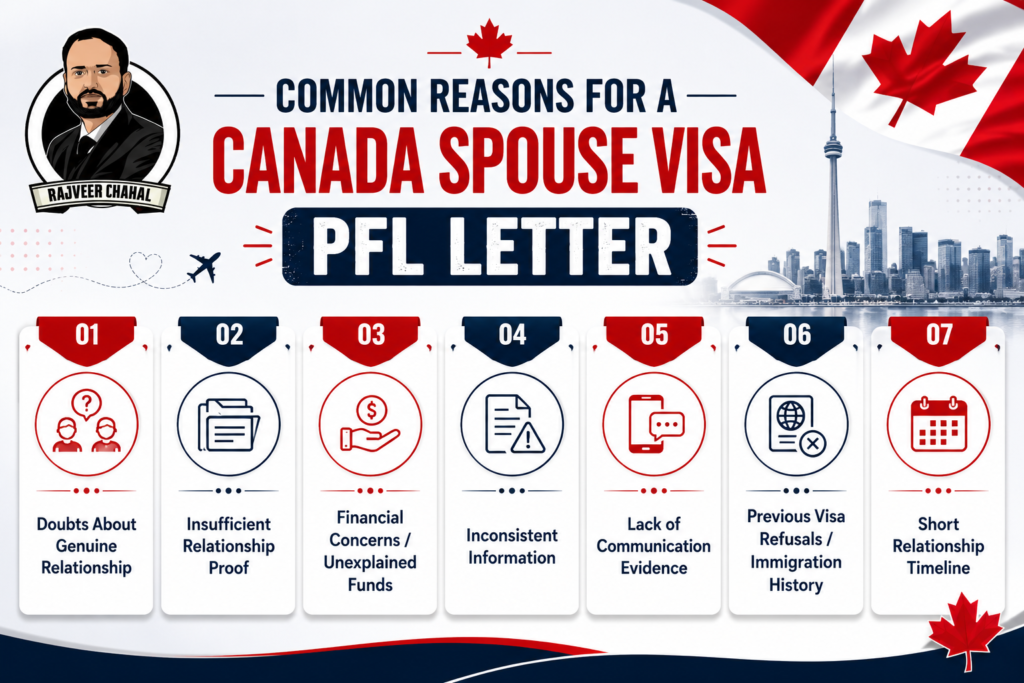
Understanding why IRCC issues a Canada Spouse Visa PFL Letter can help applicants prepare stronger responses and avoid unnecessary visa refusals.
- Doubts About Genuine Relationship
This is the most common reason behind an IRCC procedural fairness letter.
Officers may question:
- Short courtship periods
- Limited photographs together
- No wedding attendance proof
- Lack of chats or call records
- Long-distance relationships without visits
If the relationship evidence looks weak, IRCC may suspect the marriage was done mainly for immigration purposes.
- Financial Concerns
Sometimes the sponsor or applicant cannot clearly explain:
- Source of funds
- Tuition payments
- Bank deposits
- Employment history
- Sponsor income stability
Large unexplained deposits often trigger additional scrutiny.
- Inconsistent Information
Even small mismatches can create problems:
- Different marriage dates
- Incorrect employment timelines
- Different addresses
- Conflicting statements in SOPs or forms
IRCC carefully cross-checks information across all submitted documents.
- Lack of Communication Proof
Modern relationships usually leave digital evidence.
If applicants fail to provide:
- WhatsApp chats
- Call logs
- Video call screenshots
- Social media interactions
- Emails
then officers may question whether the relationship is genuine.
- Previous Refusals or Immigration History
Past refusals from Canada or other countries may also raise concerns.
Applicants should always disclose:
- Visitor visa refusals
- Study permit refusals
- Previous overstays
- Immigration violations
Hiding such details can lead to serious misrepresentation concerns.
What Does a PFL Letter Usually Contain?
A Canada Spouse Visa PFL Letter generally includes:
- IRCC officer concerns
- Relevant immigration law references
- Deadline to respond
- Requested supporting evidence
Most applicants receive 7 to 30 days to reply, depending on the case complexity.
Ignoring the letter almost always leads to refusal.
How to Respond to a Canada Spouse Visa PFL Letter
Here are some of the ways you can respond to a Canada Spouse Visa PFL letter.
- Stay Calm and Read Carefully
Do not panic.
Read every concern mentioned by IRCC line by line. Many applicants make the mistake of sending emotional responses instead of factual explanations.
Your reply should remain:
- Professional
- Structured
- Evidence-based
- Clear and concise
- Prepare a Strong Explanation Letter
Your response letter should:
- Address every concern separately
- Explain misunderstandings
- Provide timelines
- Include supporting proof references
A proper explanation letter can significantly improve your chances.
- Submit Supporting Documents
Depending on the concern, include:
- Marriage photos
- Travel tickets
- Chat screenshots
- Call records
- Financial statements
- Employment documents
- Affidavits from family
- Joint account proof
- Gift receipts
- Social media evidence
The stronger the evidence, the better the response.
- Organise Documents Properly
Many applicants lose credibility because their response is messy.
Use:
- Headings
- PDF labels
- Chronological order
- Document indexes
A well-organised file helps the visa officer review your case efficiently.
Sample Situation: Genuine Marriage Doubt
Suppose IRCC questions why a couple married quickly after only meeting once.
A strong response may include:
- Detailed relationship timeline
- Family involvement proof
- Engagement photos
- Travel history together
- Religious or cultural marriage context
- Daily communication evidence
This shows the relationship developed naturally despite limited physical meetings.
Mistakes to Avoid After Receiving a PFL
Here are some of the common mistakes you should avoid after receiving a PFL.
- Ignoring the Deadline
Late submissions can directly lead to refusal. Always submit before the given date.
- Sending Fake Documents
Never create edited chats, fake travel proof, or manipulated statements. IRCC verification systems are very advanced in 2026. Misrepresentation bans can impact future immigration opportunities for years.
- Giving Emotional Responses
Avoid statements like:
- “We truly love each other”
- “Please trust us”
- “We are emotionally stressed”
Instead, focus on evidence and facts.
- Submitting Incomplete Proof
If IRCC asks about finances, do not only send bank statements. Explain the source of funds clearly.
If they question relationship genuineness, provide multiple forms of evidence.
Can a PFL Still Lead to Approval?
Yes, absolutely. Many applicants under Canada spouse sponsorship 2026 receive approvals after successfully responding to a Canada Spouse Visa PFL Letter.
The outcome depends on:
- Quality of explanation
- Supporting documents
- Consistency of information
- Overall application credibility
A strong response can completely change the officer’s perspective.
How to Avoid a PFL Letter in the First Place
The best strategy is prevention.
Before applying:
- Submit a complete relationship timeline
- Include sufficient photographs
- Add communication proof
- Explain financial transactions
- Declare all refusals honestly
- Ensure consistency across forms
- Double-check dates and details
A well-prepared application reduces the chances of receiving an IRCC procedural fairness letter.
Final Thoughts
A Canada Spouse Visa PFL Letter can feel intimidating, but it should not be viewed as the end of your application journey. In many cases, it is simply IRCC asking for clarification before making a final decision.
Applicants who respond professionally, honestly, and with strong evidence often succeed. The key is understanding the officer’s concerns and addressing them directly with proper documentation.
As immigration checks become stricter in 2026, couples applying under Canada spouse sponsorship 2026 must focus on transparency, consistency, and detailed preparation.
A genuine relationship supported by strong evidence always has a better chance of approval. If you feel like you need guidance on anything, you can contact us for more details.
FAQs
1. What is a Canada Spouse Visa PFL Letter?
A Canada Spouse Visa PFL Letter is a Procedural Fairness Letter sent by IRCC when officers have concerns about your spouse visa application and want clarification before making a final decision.
2. Does receiving a PFL mean my spouse visa is refused?
No. A PFL is not a refusal. It is an opportunity to explain concerns and submit additional supporting documents.
3. What are the common reasons for a spouse visa PFL?
Common reasons include:
- Relationship genuineness concerns
- Weak communication proof
- Financial issues
- Inconsistent information
- Previous visa refusals
- Lack of supporting documents
4. How many days do I get to respond to a PFL?
Most applicants receive between 7 and 30 days to submit a response, depending on the case and IRCC instructions.
5. Can I submit additional documents with my PFL response?
Yes. Applicants should submit all relevant supporting evidence such as chats, photos, bank statements, travel proof, affidavits, and explanation letters.
6. What happens if I ignore a Canada Spouse Visa PFL Letter?
Ignoring the PFL usually leads to visa refusal because IRCC considers that the applicant failed to address the concerns raised.
7. Can a spouse visa still get approved after a PFL?
Yes. Many applicants receive approvals after submitting a strong and well-documented response to the PFL.
8. Should I hire an immigration consultant or lawyer for a PFL?
Complex cases involving misrepresentation concerns, refusal history, or weak documentation may benefit from professional guidance.
9. What documents help prove a genuine relationship?
Useful documents include:
- Wedding photos
- Chat screenshots
- Call logs
- Travel tickets
- Joint bank accounts
- Social media proof
- Family affidavits
10. How can I avoid getting a spouse visa PFL in 2026?
To reduce the chances of receiving a PFL:
- Submit complete documentation
- Ensure consistency across forms
- Explain financial transactions clearly
- Provide strong relationship evidence
- Declare previous refusals honestly