

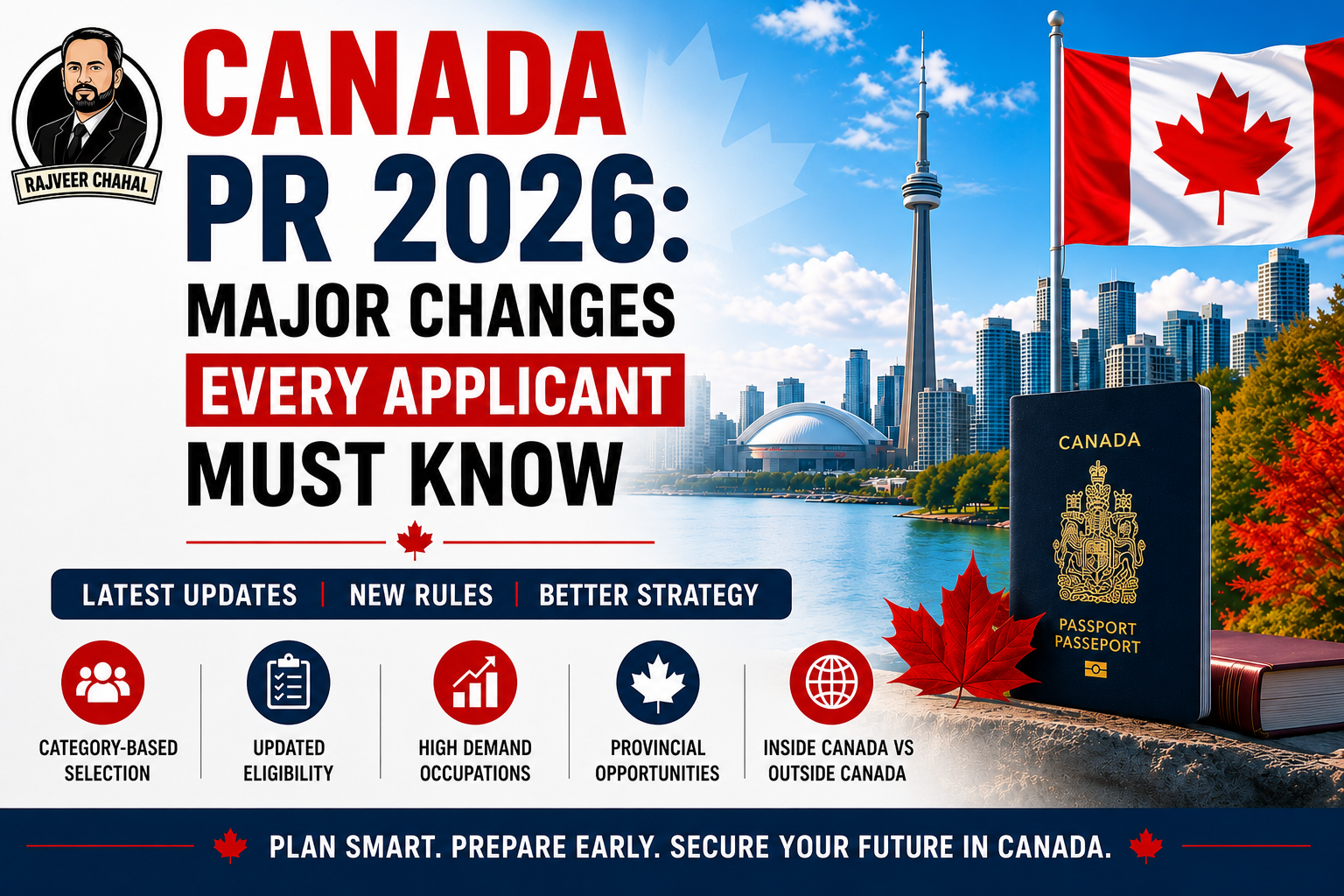
Canada has always been one of the top destinations for international students, skilled workers, and immigrants looking for better career opportunities and quality of life. However, the immigration landscape is changing rapidly. The Canada PR 2026 system is no longer as open and straightforward as it was a few years ago. The pathway from study permit to PGWP and finally to permanent residency has become much more selective and skill-focused.
Many applicants still believe that simply studying in Canada guarantees PR, but the reality in 2026 is very different. Canada is now prioritising candidates who can contribute directly to the economy, fill labour shortages, and support regional communities. Understanding these Canada immigration changes 2026 is extremely important for anyone planning their future in Canada.
Let’s take a real-world scenario. Rahul applied for Canada PR in 2026. Despite having Canadian education and work experience, he is struggling because his profile does not align with labour market demand or category-based selection. In this blog by Rajveer Chahal Education Consultant, we will look into the new rules of Canada PR, selective immigration and many more areas.
Why Canada PR Is Becoming Selective
Canada has not stopped immigration. Instead, it has changed the way candidates are selected.
Earlier
- Easier CRS cutoffs
- General draws were common
- Study to PR pathway looked simpler
- Less focus on occupation demand
Now in 2026
- Category-based draws are increasing
- Labour shortages decide selection priorities
- Skills and occupation alignment matter more
- French language candidates receive extra advantage
These Canada immigration changes 2026 are reshaping the entire PR process.
What Canada Looks for in PR Applicants
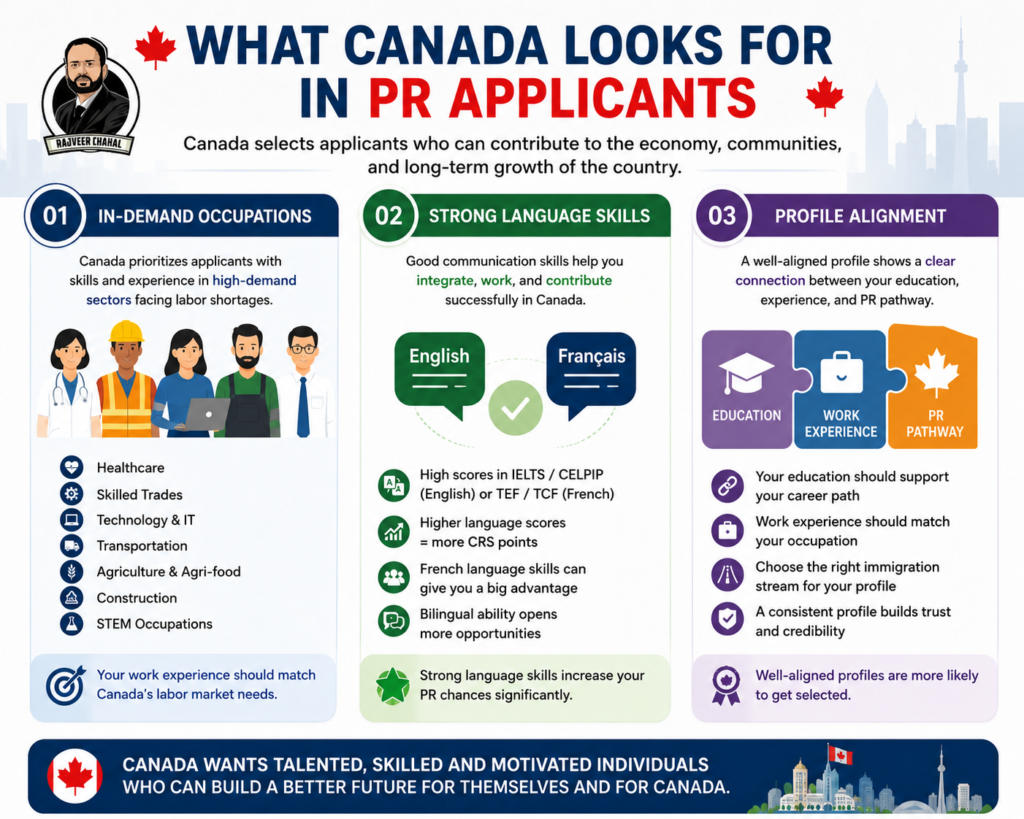
Under Canada PR 2026, immigration officers focus on profiles that show long-term economic value.
- In-Demand Occupations
Canada currently needs workers in sectors like:
- Healthcare
- Skilled trades
- Construction
- Transportation
- Agriculture
- Technology
- STEM careers
If your work experience matches these sectors, your Canada PR chances improve significantly.
- Strong Language Skills
Language ability is now one of the biggest deciding factors.
The English + French Advantage
Applicants often receive better opportunities under Canada Express Entry 2026 if they have:
- High IELTS/CELPIP scores
- French proficiency
- Bilingual communication skills
Why French Matters
Canada is conducting special category-based draws for French-speaking candidates with lower CRS scores.
This has become one of the fastest-growing PR pathways.
- Profile Alignment
A strong profile alone is not enough anymore. Canada now checks whether your Education, Work experience, Job role, and immigration pathway are all logically connected.
Example of Good Alignment
When your education, work experience, and PR pathway are connected logically, your profile appears stronger and more reliable to immigration officers. Here are some of the examples.
| Study Program | Work Experience | PR Stream |
| Healthcare | Medical Assistant | Healthcare Draw |
| IT Diploma | Software Developer | STEM Category |
| Trade Course | Electrician | Skilled Trades |
Aligned profiles usually perform better under Canada PR requirements.
Canada PR for International Students
International students still have advantages, but strategic planning is now essential.
Earlier Mistake Many Students Made
Listed below are some of the highlighted mistakes that students made:
- Chose random courses
- Focused only on getting admission
- Ignored labour market demand
- Assumed PGWP guaranteed PR
This approach is becoming risky in 2026.
Smart Strategies for Students
Choose Courses Related To:
- Healthcare
- Technology
- Engineering
- Skilled trades
- AI and data sectors
- STEM industries
You can also consider
- Regional colleges
- Smaller provinces
- PNP-focused locations
- Employer demand in the area
Canada PR for international students now depends heavily on long-term career planning.
Biggest Reasons PR Applications Get Weak
Many applicants fail not because their profile is bad, but because it lacks strategy. Some of the common problems are:
| Problems | Details |
| Weak Alignment | Unrelated studies and jobsRandom career shifts |
| Poor Language Scores | Low IELTS bandsNo French preparation |
| Wrong Course Selection | Programs with low market demand |
| No Labour Market Relevance | Experience not matching category-based draws |
Avoiding these mistakes can greatly improve Canada PR chances.
How To Improve Your Canada PR Chances in 2026
Building a strong PR profile in 2026 requires much more than simply meeting minimum eligibility criteria. Canada now prefers applicants who strategically align their education, language skills, and work experience with labour market demand. Instead of relying on luck or general draws, applicants should focus on creating a profile that clearly shows long-term economic value and settlement potential.
- Improve Language Scores
Higher IELTS, CELPIP, or French language scores can significantly increase your CRS points and PR opportunities.
- Build Relevant Work Experience
Work experience in occupations that match Canada’s labour shortages can strengthen your overall immigration profile.
- Choose Smart Immigration Streams
Targeting the right pathway, such as PNPs or category-based draws, can improve your chances of receiving an invitation.
- Keep Your Profile Consistent
Your education, work experience, and career goals should align logically to create a stronger and more credible profile.
- Strengthen Settlement Potential
Showing your ability to settle successfully in Canada through skills, adaptability, and long-term planning can positively impact your PR application.
Future of Canada Immigration
Canada still needs immigrants, but the system is becoming highly targeted.
The future immigration system will likely focus on:
- Economic contribution
- Labor shortages
- Regional settlement
- Skilled workforce demand
- French-speaking applicants
The applicants who prepare early and build strategic profiles will continue to have strong PR opportunities.
Final Thoughts
The Canada PR 2026 is not impossible, but it is no longer easy for everyone. The new immigration system rewards Skills, Planning, Career alignment, Language ability, and Labor market relevance. Applicants who understand these Canada immigration changes 2026 and prepare accordingly can still build a strong pathway toward permanent residency. Instead of depending on old immigration trends, focus on becoming the kind of candidate Canada actively wants in 2026 and beyond. Contact us for any details and further assistance.
FAQs
1. Is Canada PR becoming difficult in 2026?
Canada PR is becoming more selective in 2026 because immigration programs are now focused on labour market demand, skilled occupations, and category-based selection rather than general eligibility alone.
2. Which occupations are in demand for Canada PR 2026?
Healthcare, skilled trades, STEM fields, transportation, agriculture, and technology-related occupations are among the most in-demand sectors for Canada immigration in 2026.
3. Does studying in Canada still guarantee PR?
No, studying in Canada no longer guarantees PR automatically. International students now need strong language scores, relevant work experience, and profiles aligned with labour market needs.
4. Is the French language important for Canada PR?
Yes, French has become a major advantage because Canada is conducting category-based draws for French-speaking applicants with lower CRS score requirements.
5. Can applicants outside Canada still get PR?
Yes, overseas applicants can still receive PR if their occupation, experience, and skills match Canada’s labour shortages and immigration priorities.
6. What is the best way to improve Canada PR chances?
Improving language scores, gaining relevant work experience, targeting the right immigration stream, and maintaining profile alignment are some of the best ways to improve PR chances.
7. Are Provincial Nominee Programs important in 2026?
Yes, Provincial Nominee Programs (PNPs) are becoming increasingly important because provinces are selecting immigrants based on their specific labour market and regional needs.
8. What CRS score is considered good for Canada PR in 2026?
A competitive CRS score depends on the draw category, but applicants with strong language scores, skilled experience, and category-based eligibility usually have better chances.
9. Which provinces offer better PR opportunities in 2026?
Many smaller provinces and regional areas are offering strong PR opportunities through PNPs because they are actively addressing local labor shortages.
10. Can low CRS score applicants still get Canada PR?
Yes, applicants with lower CRS scores may still qualify through category-based draws, French language streams, Provincial Nominee Programs, or in-demand occupation pathways.