

Many travelers use the terms “visitor visa” and “tourist visa” interchangeably, but they are not always exactly the same. The meaning can vary from country to country, which is why understanding the difference between a visitor visa and a tourist visa is important before submitting any visa application. In some countries, tourism is covered under a general visitor visa, while others use separate visa categories depending on the purpose of travel.
If you are planning an international trip for tourism, family visits, personal reasons, or short-term activities, choosing the correct visa category can help you prepare the right documents and avoid unnecessary confusion during the application process.
What Is a Tourist Visa?
A tourist visa is generally designed for people travelling mainly for leisure, holidays, and sightseeing. It is commonly used when the primary purpose of the trip is tourism rather than visiting family, conducting business, or participating in other activities.
Common purposes of a tourist visa may include:
A tourist visa normally allows travelers to stay in the destination country temporarily. The permitted stay, visa validity, and number of entries depend on the immigration rules of the country issuing the visa.
What Is a Visitor Visa?
A visitor visa can be a broader temporary visa category. Depending on the country, it may cover tourism as well as other short-term purposes such as visiting family members or friends attending personal events, receiving medical treatment, or undertaking certain limited business activities.
A visitor visa may be suitable for purposes such as
However, visitor visa rules are different in every country. Applicants should always check the official immigration requirements for their destination before applying.
Visitor Visa vs Tourist Visa: Key Differences
| Feature | Tourist Visa | Visitor Visa |
| Main purpose | Tourism and leisure | Tourism, family visits, and other permitted temporary purposes |
| Sightseeing | Usually allowed | Usually allowed |
| Visiting family | May not be the primary purpose | Common purpose |
| Visiting friends | Depends on the country | Commonly included |
| Business activities | Usually restricted | May be permitted under certain visitor categories |
| Medical treatment | Not usually the main purpose | May be permitted depending on the country |
| Duration | Depends on destination | Depends on country and visa category |
| Work permission | Generally not allowed | Generally not allowed unless specifically authorized |
| Study permission | Usually restricted | Usually restricted unless specifically permitted |
The biggest difference between a tourist visa and a visitor visa is generally the purpose of travel. A tourist visa is mainly associated with holidays and sightseeing, while a visitor visa may cover a wider range of temporary travel purposes.
Is a Visitor Visa the Same as a Tourist Visa?
Not necessarily.
In some countries, both terms may effectively refer to the same temporary-entry category. In others, the immigration system distinguishes between tourism and other types of visits.
For example, a person travelling only for sightseeing may fall under a tourist category, whereas someone travelling to meet family could fall under a visitor or family-visit category.
This is why applicants should not select a visa based only on the wording “tourist visa” or “visitor visa.” The actual purpose of travel and the official visa category offered by the destination country should guide the application.
Purpose of Travel Matters Most
Your purpose of travel is one of the most important factors when deciding between a tourist visa and a visitor visa.
If your main purpose is to visit famous attractions, explore a country, go on vacation, or enjoy leisure activities, the relevant tourism category may apply.
If your main purpose is to visit your son, daughter, spouse, parents, relatives, or friends, a visitor or family-visit category may be more appropriate where such a category exists.
The supporting documents should also match the declared purpose of your trip.
For example, a tourism-focused application may include:
A family visitor visa application may additionally include:
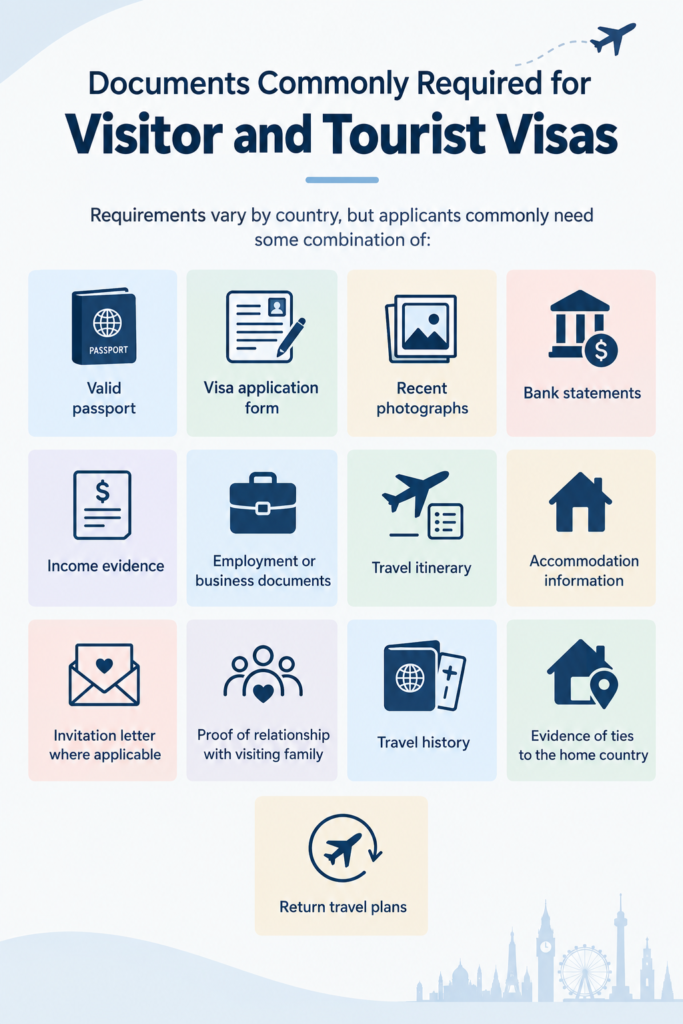
Documents Commonly Required for Visitor and Tourist Visas
Requirements vary by country, but applicants commonly need some combination of:
Some immigration authorities may request additional documents based on the applicant’s circumstances.
Can You Work on a Tourist or Visitor Visa?
Generally, a tourist visa or standard visitor visa does not automatically authorize employment.
Travellers should not assume that entering a country as a visitor allows them to start working. Work authorization normally requires a separate work permit or another immigration status specifically allowing employment.
The exact rules depend on the destination country.
How Long Can You Stay on a Visitor Visa or Tourist Visa?
There is no universal duration.
The validity of a visitor visa or tourist visa depends on the country, visa type, nationality of the applicant, and immigration decision.
A visa may be valid for weeks, months, or multiple years, while the period you are actually permitted to stay on each visit may be different from the visa’s overall validity.
Always check both:
Single Entry vs. Multiple Entry Visitor Visa
Visitor visas and tourist visas may also be issued as single-entry or multiple-entry visas.
A single-entry visa generally allows one entry into the destination country during the visa’s validity.
A multiple-entry visitor visa may allow the traveller to enter the country several times while the visa remains valid, subject to immigration rules and the permitted duration of each stay.
Tourist Visa vs. Family Visitor Visa
One common area of confusion is the difference between a tourist visa and a family visitor visa.
A tourist generally travels primarily for sightseeing or leisure.
A family visitor travels primarily to meet relatives, attend a family event,
or spend temporary time with family members living abroad.
While both travellers may participate in tourism during their stay, the main purpose stated in the visa application should accurately reflect the real reason for travel.
Visitor Visa vs. Tourist Visa for Canada
For Canada, people commonly use terms such as “Canada tourist visa” and “Canada visitor visa,” but temporary visitors requiring a visa generally apply for a Temporary Resident Visa, commonly referred to as a visitor visa.
The purpose of the visit can still be tourism, visiting family, or another eligible temporary purpose.
Applicants should clearly explain:
The supporting documents should be consistent with the stated purpose of travel.
Which Is Better: Tourist Visa or Visitor Visa?
There is no visa that is automatically “better.”
The correct visa is the one that matches your actual reason for travelling.
If your purpose is tourism, choose the visa category recognized by that country for tourism.
If you are travelling to visit relatives or for another temporary purpose, select the appropriate visitor category where available.
Submitting an application under the wrong category or providing documents that do not match your travel purpose can create unnecessary complications.
Tips Before Applying for a Visitor Visa or Tourist Visa
Before submitting your application:
- Confirm your exact purpose of travel.
- Check the official visa categories of the destination country.
- Make sure your financial documents are sufficient and genuine.
- Prepare documents that support your travel purpose.
- Clearly explain your planned duration of stay.
- Maintain consistency between your application form, invitation letter, and supporting documents.
- Check visa validity and permitted length of stay.
- Apply sufficiently before your intended travel date.
These steps can help you prepare a clearer and better-organized visitor visa application.
Frequently Asked Questions
Q1. What is the main difference between a visitor visa and a tourist visa?
Ans. A tourist visa is generally intended primarily for holidays and sightseeing. A visitor visa may cover tourism as well as family visits, personal visits, and certain other temporary activities, depending on the country.
Q2. Can I visit family on a tourist visa?
Ans. It depends on the country’s immigration rules. Some countries allow family visits under the same visitor or tourism category, while others distinguish between different purposes of travel.
Q3. Can I work on a visitor visa?
Ans. Normally, a standard visitor visa does not provide open permission to work. Separate authorization may be required.
Q4. Is visitor visa validity the same as allowed stay?
Ans. No. A visa can remain valid for a longer period, while each individual visit may have a separate maximum authorized stay.
Q5. Can a visitor visa be used for tourism?
Ans. In many countries, yes. Visitor visa categories often include tourism, but applicants should check the destination country’s official immigration rules.
Q6. Which documents are important for a visitor visa?
Ans. Common documents include a valid passport, financial evidence, travel purpose documents, accommodation details, travel history, and documents showing your reasons to return home.
Conclusion
Understanding the difference between a visitor visa and a tourist visa can help you choose the correct visa category and prepare stronger supporting documents. A tourist visa generally focuses on leisure and sightseeing, while a visitor visa may cover tourism, family visits, and other permitted temporary purposes.
Because visa terminology and eligibility rules vary by country, always check the official immigration requirements for your intended destination before applying. Your application should clearly explain the purpose of travel and include documents that support that purpose.


