


Choosing between Canada, the United Kingdom, and Australia is an important decision for international students planning to study abroad in 2026. Along with university rankings and tuition fees, students often consider post-study work opportunities and the possibility of obtaining permanent residency (PR).
However, studying in a country does not automatically guarantee PR. Each destination has different immigration pathways, eligibility requirements, and conditions for international graduates.
This guide compares Canada vs. the UK vs. Australia PR after graduation, including post-study work visas, immigration pathways, eligibility factors, and long-term settlement planning.
Canada vs. UK vs. Australia PR After Graduation: Quick Comparison
| Feature | Canada | UK | Australia |
| Post-study work route | PGWP | Graduate Route | Subclass 485 |
| PR pathways | Express Entry, PNP | Skilled worker and other eligible routes | Skilled migration, nomination, sponsorship |
| Job offer for graduate route | Generally not required for PGWP | Not required for the Graduate Route | Generally not required for eligible 485 streams |
| Direct PR after study | No | No | No |
| Key consideration | Skilled work experience | Eligible employment and settlement route | Occupation, skills, and nomination |
The right destination depends on your qualifications, career goals, budget, and eligibility for immigration programs.
1. Canada: Study, Work, and Permanent Residency
Canada attracts international students who want to gain Canadian education and work experience before exploring economic immigration programs.
However, not every Canadian institution or program qualifies for a post-graduation work permit.
Post-Graduation Work Permit (PGWP)
The PGWP allows eligible international graduates to gain Canadian work experience. Depending on the program and applicable requirements, graduates may receive a permit for up to three years.
Important considerations include:
Students should verify their specific program’s PGWP eligibility before enrolling.
Canada PR Pathways After Graduation
Canadian Experience Class (CEC): This Express Entry program is designed for eligible skilled workers with qualifying Canadian work experience. Applicants must meet the program’s work experience, language and other requirements.
Provincial Nominee Programs (PNPs): Provinces and territories operate immigration streams with their own eligibility and nomination criteria. Some streams may be relevant to international graduates.
Other Express Entry programs: Graduates may qualify through another federal economic immigration program if they meet its requirements.
Canadian education alone does not guarantee an invitation or PR approval.
What Affects PR Value in Canada?
Students should consider whether their program qualifies for a PGWP, whether their intended occupation offers relevant employment opportunities, and whether they can meet the requirements of a potential immigration program.
Language proficiency, skilled work experience, CRS ranking, and provincial nomination opportunities may also influence immigration options.
2. United Kingdom: Graduate Route and Settlement
The UK attracts international students through its universities, postgraduate programs, and employment opportunities. Some postgraduate qualifications can be completed within a relatively short study period.
However, the Graduate Route is temporary permission to remain in the country, not permanent residency.
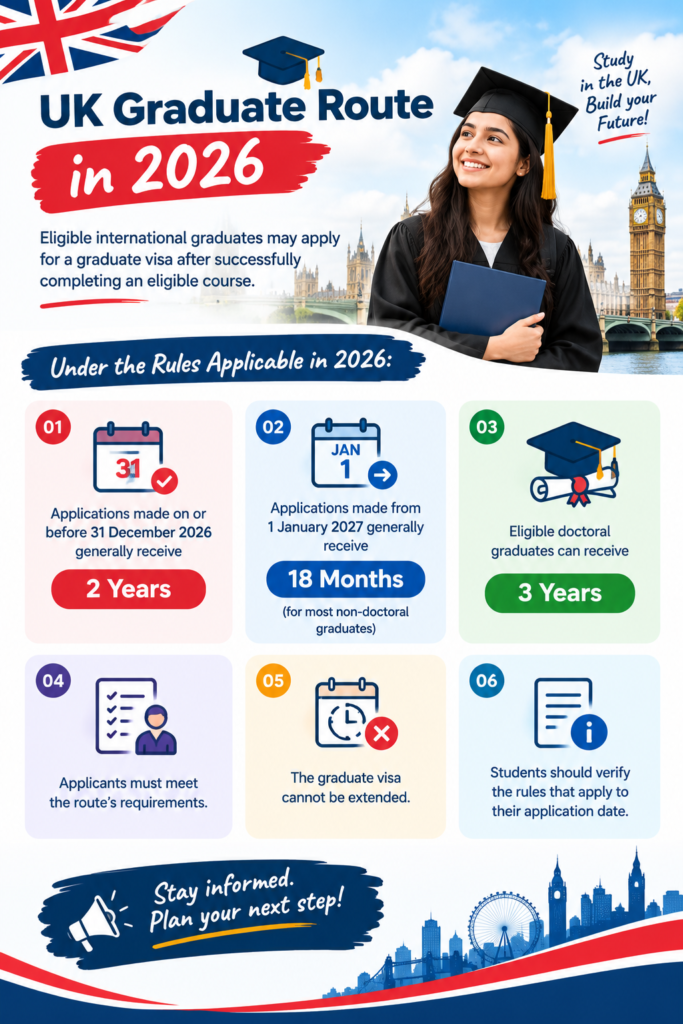
UK Graduate Route in 2026
Eligible international graduates may apply for a graduate visa after successfully completing an eligible course.
Under the rules applicable in 2026:
Students should verify the rules that apply to their application date.
UK PR Pathways After Graduation
Graduates who want to remain longer may need to switch to another eligible immigration route.
Skilled Worker visa: Applicants generally need an eligible job offer from an approved sponsor and must meet applicable occupation, salary, and other requirements.
Global Talent route: Eligible individuals who satisfy the relevant criteria may be able to apply through this route.
Other immigration routes may also be available depending on individual circumstances.
Graduates must meet the applicable settlement requirements before qualifying for permanent residence. Holding a graduate visa does not automatically provide settlement eligibility.
What Affects PR Value in the UK?
Students should consider the Graduate Route duration, opportunities for sponsored employment, salary requirements, and whether their intended career supports a transition to an eligible immigration route.
3. Australia: Temporary Graduate Visa and Skilled Migration
Australia offers international graduates opportunities to gain local work experience and explore skilled migration or employer-sponsored pathways.
Its immigration system includes points-tested visas, state and territory nomination programs, and employer-sponsored options.
Temporary Graduate Visa (Subclass 485)
Eligible graduates may apply for a temporary graduate visa under the relevant stream.
This visa can provide temporary work rights after qualifying Australian studies. The permitted stay depends on the stream, qualification, and applicable immigration rules.
Age limits, qualification requirements, and other conditions may apply. Students should check the current eligibility criteria before choosing a course.
Australia PR Pathways After Graduation
Skilled Independent Visa (subclass 189): This permanent visa is available to eligible skilled workers who meet the relevant occupation, skills, invitation, and other requirements.
Skilled Nominated visa (subclass 190): This permanent visa requires nomination by an Australian state or territory and satisfaction of applicable criteria.
Skilled Work Regional visa (subclass 491): This provisional visa is available to eligible skilled workers nominated by a state or territory or sponsored by an eligible family member. It may lead to permanent residence if the applicant meets the relevant requirements.
Employer-sponsored pathways: Graduates may explore employer-sponsored visas if they meet the occupation, employment, and visa criteria.
What Affects PR Value in Australia?
Important factors include occupation eligibility, skills assessment, English-language proficiency, points-test requirements, state nomination criteria, and employer sponsorship opportunities.
Some pathways also involve regional conditions. Graduates must meet the requirements of the specific visa they intend to pursue.
4. Canada vs. UK vs. Australia: What Happens After Graduation?
The main difference between these destinations is how graduates transition from temporary work permission to a longer-term immigration pathway.
| Country | Simplified pathway |
| Canada | Eligible study → PGWP → qualifying skilled work → eligible PR program |
| UK | Eligible qualification → Graduate Route → eligible work visa → settlement requirements |
| Australia | Eligible qualification → subclass 485, if eligible → skilled migration or sponsorship |
These are simplified examples. Each stage has separate eligibility requirements, and not every graduate will qualify for the next step.
5. Which Country Offers Better PR Value After Graduation?
There is no single answer that applies to every student. The value of studying in Canada, the UK, or Australia depends on individual circumstances and long-term goals.
Career and Occupation
Your intended profession can affect employment opportunities and immigration options.
Research whether your occupation is relevant to skilled migration, employer sponsorship, or nomination pathways.
Post-Study Work Duration
The time available after graduation can affect your opportunity to find employment and plan your next immigration step.
Compare the actual duration available for your qualification and circumstances rather than relying only on maximum advertised periods.
Immigration Eligibility
Your age, qualifications, language proficiency, work experience, and occupation may affect eligibility.
Assess these requirements before committing to an international course.
Total Education Cost
Compare tuition fees, accommodation, living expenses, insurance, and other costs.
A shorter course may reduce study time, but also consider whether the qualification supports your career goals and employment opportunities.
6. Common Mistakes Students Should Avoid
When comparing Canada vs. the UK vs. Australia PR after graduation, avoid these mistakes:
- Assuming graduation guarantees permanent residency.
- Selecting a course without checking post-study work eligibility.
- Relying on general occupation demand without reviewing visa criteria.
- Ignoring language test and skills assessment requirements.
- Confusing a temporary work visa with PR.
- Making financial decisions using outdated immigration information.
- Waiting until graduation to research settlement options.
Planning ahead can help students understand their options, although immigration rules and selection requirements may change.
7. How to Choose Your Study Destination
Before selecting a country or university, consider these questions:
These questions can help students make informed decisions instead of relying on general claims about which country is easiest for settlement.
Conclusion
The comparison of Canada vs. the UK vs. Australia PR after graduation in 2026 highlights different post-study work opportunities and immigration pathways.
Canada offers the PGWP and economic immigration routes such as Express Entry and provincial nomination. The UK provides the Graduate Route, followed by eligible work and settlement pathways. Australia offers temporary graduate options alongside skilled migration, nomination, and employer-sponsored routes.
Permanent residency is not guaranteed in any of these countries simply because a student graduates there.
The appropriate destination depends on your course, occupation, budget, employment opportunities, and ability to meet immigration requirements.
Researching these factors before selecting a university can help you develop a realistic study-abroad plan.
Get Guidance for Your Study Abroad Plans
Planning to study in Canada, the UK, or Australia? Rajveer Chahal Education Consultant (RCEC) can help you explore study options, understand course eligibility, and plan your application process.
Contact our team for guidance on your overseas education plans and profile assessment.
Rajveer Chahal Education Consultant (RCEC)
Website: https://rajveerchahal.com/
Call / WhatsApp: 7068161111 | 7508361111
Frequently Asked Questions
1. Which country gives PR after graduation in 2026: Canada, the UK, or Australia?
None automatically grants PR after graduation. Each country has separate immigration pathways and eligibility requirements.
2. Can I get PR in Canada after studying?
Eligible graduates may qualify for programs such as the Canadian Experience Class or certain Provincial Nominee Programs, subject to applicable criteria.
3. Does the UK Graduate Route lead directly to PR?
No. It is a temporary immigration route. Graduates generally need to transition to another eligible route and meet settlement requirements.
4. Can international students get PR in Australia after graduation?
Some graduates may qualify for skilled migration or employer-sponsored pathways, depending on their occupation, skills, and other criteria.
5. Is a post-study work visa the same as permanent residency?
No. A post-study work visa provides temporary permission to stay and work. PR requires a separate eligible immigration pathway and approval.
6. What should I check before choosing a country for study and PR?
Check course eligibility, post-study work rules, occupation requirements, language criteria, employment opportunities, education costs, and current immigration rules.


