


For countless Indian families, studying in Canada represents more than just higher education—it symbolises opportunity, global exposure, career growth, and the possibility of a better future. Parents spend years saving money, students work tirelessly to achieve strong academic results, and entire families invest emotionally and financially in the dream of international education.
However, social media often presents only one side of the story. Photos of snow-covered campuses, graduation ceremonies, and successful careers create an attractive image of life abroad. What many students do not see are the financial pressures, academic challenges, emotional struggles, and practical realities that come with studying overseas.
This Middle-Class Dream Studying in Canada Reality Check explores the real experiences of international students and provides a balanced perspective for families considering Canadian education.
Key Insight: Studying in Canada can be a powerful opportunity for middle-class Indian students, but success depends on realistic expectations, financial planning, academic preparation, emotional strength, and long-term career strategy.
Team Rajveer Chahal
Why Canada Attracts So Many Indian Students
Canada has become one of the most preferred study destinations for Indian students due to several advantages:
At the end of 2024, Canada had nearly 997,820 valid study permit holders, demonstrating its continued popularity among international students.
For middle-class families, Canada often appears more affordable than some other major study destinations while still offering strong educational and career opportunities. But affordability is relative—and understanding the full financial picture is essential.
The Dream Begins at Home
Most international student journeys begin years before the actual flight.
Imagine a student named Rahul from a middle-class family in India. His father works in a private company, and his mother manages household responsibilities. Like many Indian parents, they believe education is the most reliable path to upward mobility.
The family starts hearing success stories:
Gradually, studying abroad becomes more than an idea—it becomes a family goal. However, what starts as a dream soon requires serious financial planning.
ALSO READ:Canada vs UK vs Australia: Which is the Best Country for Students in 2026?
The First Reality: Education Is Expensive
One of the biggest misconceptions among students is that studying in Canada is inexpensive. The reality is that international education requires substantial investment.
A typical student may face expenses such as:
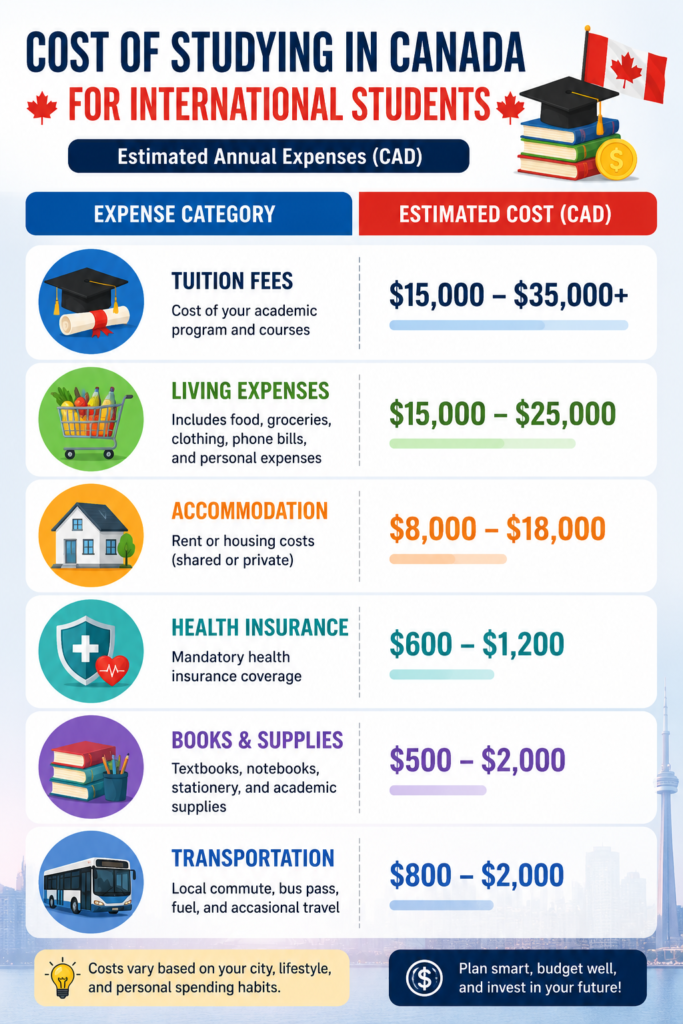
| Expense Category | Common Cost Area |
|---|---|
| Tuition Fees | College or university program fees |
| Living Expenses | Rent, groceries, transportation, utilities, and personal expenses |
| Visa and Documentation | Study permit, biometrics, medical exam, and document preparation |
| Travel Costs | Flight tickets and initial settlement expenses |
| Emergency Funds | Unexpected costs such as housing deposits, winter clothing, or job search delays |
For many middle-class families, these costs represent years of savings. This is why Study in Canada for Middle-Class Students requires careful budgeting rather than relying solely on optimism.
The Loan Factor
Many families finance overseas education through education loans. While loans can make studying abroad possible, they also create responsibilities.
Students often graduate with pressure to:
The emotional burden of knowing that parents have invested their savings can be significant. This pressure becomes even greater when students struggle to find part-time jobs or face unexpected expenses.
The IELTS Myth
Another common misconception is that clearing IELTS automatically guarantees success. Achieving the required language score is important, but it is only the beginning.
Students must still:
Many students who score well on language tests still experience challenges when they first arrive in Canada. Success depends on continuous learning and communication skills.
Student Tip: IELTS or any language test is only one step. Students should continue improving speaking, listening, writing, and workplace communication skills before and after arriving in Canada.
Team Rajveer Chahal
Social Media vs Reality
Social media often highlights:
What rarely appears online includes:
The Canada Study Visa Reality is more balanced than what many online influencers portray. Most students live modestly and work hard to manage their responsibilities. The glamorous lifestyle shown online is not representative of every student’s experience.
Housing: One of the Biggest Challenges
Housing has become a major concern across many Canadian cities.
Students frequently encounter:
Cities such as Toronto and Vancouver often have significantly higher housing costs than smaller cities. Many students share apartments with multiple roommates to reduce expenses.
While this arrangement helps financially, it may also reduce privacy and comfort. Understanding accommodation realities is an important part of any Middle-Class Dream Studying in Canada Reality Check.
Part-Time Jobs: Opportunity and Reality
One of the most common questions is:
“Can I cover my expenses through part-time work?”
The honest answer is: partially.
Part-time employment can help students manage:
However, depending entirely on part-time income is risky.
Job availability varies depending on:
Students may not immediately secure employment after arriving. Therefore, families should ensure sufficient financial resources before departure.
ALSO READ:Part-Time Jobs in Canada for Students in 2026
Balancing Work and Studies
Working while studying sounds manageable in theory. In reality, balancing both responsibilities can be demanding.
A typical week may involve:
Many students learn valuable skills such as:
However, excessive work hours can negatively impact academic performance. Education should always remain the primary objective.
Academic Expectations Are Different
Canadian education often differs significantly from what students experience in India.
Students are expected to:
Success requires more than memorization.
Many students initially struggle with:
Adjustment takes time, patience, and effort.
Homesickness Is Real
One aspect rarely discussed enough is homesickness.
Students miss:
Special occasions such as Diwali, birthdays, and weddings can be emotionally challenging when spent away from loved ones.
Video calls help maintain connections, but they cannot replace physical presence. Developing a support network becomes crucial for emotional well-being.
Weather Adjustment
Canada’s climate can surprise many newcomers.
Students arriving from warmer regions may experience:
Adapting to winter requires:
While many students eventually enjoy the Canadian winter experience, the adjustment period can be difficult.
Building a Career Takes Time
Another misconception is that employment automatically follows graduation.
The reality is that career development requires:
Employers often seek candidates with practical experience and strong interpersonal skills.
Students who actively participate in career fairs, workshops, volunteer programs, and industry events typically improve their employment prospects.
The Value of Canadian Education
Despite the challenges, Canadian education offers substantial benefits.
| Benefit | How It Helps Students |
|---|---|
| Global Exposure | Interaction with people from diverse backgrounds broadens perspectives and cultural understanding |
| Industry-Relevant Skills | Programs frequently emphasize practical learning and real-world applications |
| Professional Networks | Connections built during studies can support future career opportunities |
| Personal Growth | Living independently develops confidence, responsibility, and adaptability |
These benefits often extend far beyond graduation.
Success Stories Do Exist
A reality check should not be confused with negativity. Many students genuinely succeed.
They:
However, success rarely happens overnight. Behind every success story are years of effort, sacrifice, and persistence.
The difference between expectations and reality is often the willingness to work consistently toward long-term goals.
Key Reality: Canada can offer strong opportunities, but success is not instant. Students must combine education, skills, networking, patience, and consistent effort to build long-term results.
Team Rajveer Chahal
Common Mistakes Students Make
Choosing Programs Without Research
Students sometimes select courses based solely on popularity rather than career relevance.
Underestimating Costs
Unexpected expenses can create financial stress.
Relying Entirely on Part-Time Income
Employment opportunities are not guaranteed, especially immediately after arrival.
Ignoring Networking
Professional relationships often influence career outcomes.
Unrealistic Expectations
Expecting instant success can lead to disappointment.
Avoiding these mistakes improves the likelihood of a positive experience.
Is Studying in Canada Worth It?
The answer depends on individual circumstances.
For students who:
Canada can provide tremendous value.
For those seeking a quick route to success without preparation, challenges may outweigh expectations. International education should be viewed as an investment rather than a shortcut.
ALSO READ:Can Average Students Get Canada Visa? Truth Revealed
What Middle-Class Families Should Consider
Before making a decision, families should evaluate:
Financial Readiness
Can the family comfortably manage tuition and living expenses?
Career Alignment
Does the chosen program support long-term employment goals?
Student Preparedness
Is the student emotionally and academically ready for international education?
Long-Term Planning
What are the student’s goals after graduation?
Answering these questions honestly helps families make informed decisions.
The Reality Behind the Dream
The Middle-Class Dream Studying in Canada Reality Check reveals an important truth:
Canada offers genuine opportunities, but those opportunities come with responsibilities.
Students must be prepared to:
The journey is neither effortless nor impossible. It lies somewhere between the idealized version seen on social media and the challenges often highlighted in negative stories.
Final Thoughts
For thousands of middle-class Indian families, studying in Canada remains an achievable and worthwhile goal. But there will also be growth, learning, independence, and opportunities that can shape a student’s future for years to come.
The most successful students are not necessarily the wealthiest or the smartest. They are often the ones who plan carefully, adapt quickly, and remain committed when things become difficult.
Canada is not a magic solution to every problem. It is a platform—one that can help determined students build meaningful careers and rewarding lives.
For middle-class families, the dream is still possible. The reality check simply ensures that the dream is built on preparation, knowledge, and informed decisions rather than assumptions.
Final Insight: Studying in Canada can be worth it for middle-class families, but only when the decision is based on realistic costs, strong planning, career alignment, and a clear understanding of student life abroad.
Team Rajveer Chahal
Need Expert Study Abroad Guidance?
Reach out to Rajveer Chahal Education Consultant today for professional guidance on Canada study planning, college selection, financial preparation, and study visa strategy.
Call: 7508361111 or 7068161111
Contact us for more details and further assistance.
Related Articles
Frequently Asked Questions (FAQs)
1. Is studying in Canada affordable for middle-class Indian families?
Yes, but it requires careful financial planning. Tuition fees, living expenses, and travel costs can add up, making budgeting essential.
2. What is the average cost of studying in Canada?
Depending on the program and city, international students may spend between CAD 25,000 and CAD 50,000+ annually on tuition and living expenses.
3. Can part-time jobs cover all expenses in Canada?
Part-time work can help with living expenses, but students should not rely solely on earnings to fund their entire education.
4. Is Canada still worth it for international students?
For many students, Canada offers quality education, global exposure, and valuable career opportunities, making it a worthwhile investment.
5. What are the biggest challenges for Indian students in Canada?
Common challenges include housing costs, homesickness, weather adjustment, time management, and finding suitable employment.
6. Do students find jobs easily in Canada?
Job availability varies by location, skills, and market conditions. Students often need persistence and networking to secure employment.
7. Which Canadian cities are more affordable for students?
Cities such as Winnipeg, Saskatoon, Regina, and Halifax are often more affordable than Toronto or Vancouver.
8. Can international students work while studying?
Yes, eligible students can work according to the conditions stated on their study permits.
9. What mistakes should students avoid?
Poor financial planning, choosing programs without career research, relying heavily on part-time income, and unrealistic expectations are common mistakes.
10. What should middle-class families consider before sending a child to Canada?
Families should evaluate total education costs, career prospects, financial resources, student readiness, and long-term goals before making a decision.