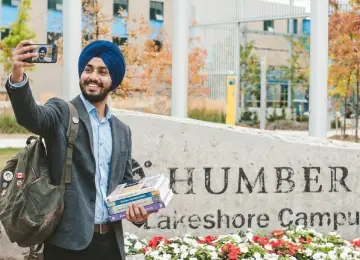

For thousands of students across India, especially those living in small towns and villages, studying abroad often feels like a distant dream. Limited resources, lack of awareness, financial challenges, and social expectations can make international education seem out of reach. However, every year, many students prove that determination, planning, and the right guidance can transform those dreams into reality.
This From Village to Canada Student Journey is inspired by real-life experiences of students who started with humble beginnings and successfully built a future in Canada. While the details represent a realistic scenario rather than a single individual, the challenges, emotions, and milestones described here closely reflect what many Indian students experience on their path to studying abroad.
Continue reading this guide by Rajveer Chahal Education Consultant.
Key Insight: A student’s village background does not limit their future. With proper planning, strong documentation, English preparation, financial readiness, and expert guidance, rural Indian students can successfully study in Canada and build global careers.
Team Rajveer Chahal
Growing Up in a Small Indian Village
Life in a village offers simplicity, close-knit communities, and strong family values. However, it can also come with limitations in educational opportunities and career exposure.
Imagine a student named Arjun, born and raised in a small village in Punjab. His family relied primarily on agriculture for income. Like many rural families, they worked hard every day to support their household and provide education for their children.
Arjun attended a government school where resources were limited. Internet access was inconsistent, and information about international education was scarce. Most students in his village planned to either join family businesses, work in agriculture, or pursue local employment opportunities.
Yet Arjun had bigger dreams.
He often heard stories of students studying abroad and building successful careers. The idea of gaining international education fascinated him. Although he had never traveled outside his state, he became determined to explore opportunities beyond his village.
This marked the beginning of his Canada Student Success Story.
Discovering the Possibility of Studying in Canada
During his higher secondary education, Arjun started researching international study options through online videos, educational websites, and conversations with former students.
Initially, countries like the United States, Australia, and the United Kingdom attracted his attention. However, after comparing factors such as tuition fees, work opportunities, immigration pathways, and quality of life, Canada stood out.
Several reasons influenced his decision:
For many families considering overseas education, Canada represents a balanced combination of quality education and long-term career potential.
This realization motivated Arjun to begin his Study in Canada from India journey seriously.
ALSO READ:Canada vs UK vs Australia: Which is the Best Country for Students in 2026?
Facing Financial Challenges
One of the biggest obstacles was financing international education.
Arjun’s family had never imagined spending lakhs of rupees on overseas studies. The estimated expenses for tuition, living costs, visa applications, and travel seemed overwhelming.
Like many rural families, his parents questioned whether such an investment would be worthwhile.
Questions constantly arose:
Instead of giving up, Arjun focused on finding solutions.
He researched:
Through careful planning, family support, and financial assistance, they created a realistic budget.
This stage demonstrates an important lesson from many Canada study visa success story for rural Indian students experiences: challenges can often be managed through preparation and persistence.
Preparing for English Language Tests
Another significant hurdle involved language proficiency.
Although Arjun had studied English in school, speaking and writing confidently was a different challenge altogether.
Many students from rural backgrounds face similar difficulties because they have limited exposure to English communication outside the classroom.
To improve his skills, Arjun:
Months of preparation eventually helped him achieve the required language score.
The process was not easy. There were moments when he felt discouraged after receiving low practice test scores. However, consistency gradually improved his confidence.
His experience reflects the reality of many students searching for How an Indian village student reached Canada for higher studies.
Student Tip: Rural students should start English preparation early. Strong communication skills help not only in admission and visa preparation but also in part-time jobs, networking, and long-term career growth in Canada.
Team Rajveer Chahal
Choosing the Right College and Program
Selecting the right institution became the next major decision.
Instead of simply following popular trends, Arjun evaluated programs based on:
After extensive research, he selected a diploma program aligned with his career goals.
His decision was strategic rather than emotional. Many successful international students understand that choosing the right course is often more important than selecting the most famous institution.
The goal was not merely studying abroad but building a sustainable career.
Navigating the Application Process
The college application process introduced new complexities.
Documents required included:
For a student from a village, the paperwork seemed intimidating at first. There were numerous deadlines, requirements, and procedures to understand.
However, with proper guidance and careful organization, Arjun successfully completed every step.
His college acceptance letter became a turning point. For the first time, his dream felt real. His family celebrated this achievement because it represented years of effort and sacrifice.
Applying for a Study Permit
Receiving admission was only part of the journey. The next challenge involved securing a Canadian study permit.
Visa applications require applicants to demonstrate:
Arjun prepared a detailed application supported by relevant documentation.
He clearly explained:
Waiting for a decision was stressful. Every day felt longer than usual. Like many students featured in a Real journey of a student from village to Canada, uncertainty became one of the most difficult parts of the process.
Finally, the approval arrived. The dream was becoming reality.
ALSO READ:SOP Tips That Increase Your Canada Visa Approval Chances
Leaving Home for the First Time
Few moments are as emotional as leaving one’s village and family for the first time.
Arjun had rarely traveled beyond neighboring cities. Now he was preparing to fly across the world.
His departure day was filled with mixed emotions:
At the airport, his parents encouraged him to stay focused and work hard. The farewell was emotional because everyone understood the significance of the opportunity.
Thousands of students experience this exact moment every year as they transition from rural India to international education.
First Impressions of Canada
Arriving in Canada was both exciting and overwhelming.
Everything felt different:
The first snowfall was particularly memorable. Coming from a village where winters were relatively mild, seeing snow-covered streets felt surreal.
However, adaptation required effort. Simple tasks such as using public transportation, grocery shopping, managing finances, and understanding local systems required learning and adjustment.
This phase tested his independence more than any previous experience.
Balancing Studies and Part-Time Work
Like many international students, Arjun decided to work part-time. Balancing academics and employment was challenging.
His weekly routine often included:
Time management became essential.
The experience taught valuable life skills:
Many employers appreciated his strong work ethic. These experiences contributed significantly to his personal growth.
This aspect frequently appears in every Indian Student in Canada success story.
Overcoming Homesickness
One challenge that many students underestimate is homesickness.
Despite achieving his dream, Arjun occasionally missed:
Video calls helped maintain connections, but they could not fully replace physical presence.
Over time, he learned healthy coping strategies:
Gradually, Canada began to feel like a second home.
Building a Professional Network
Success in Canada involves more than classroom education.
Arjun actively participated in:
These activities expanded his professional network and increased his understanding of the Canadian job market.
Many students focus solely on academics and overlook networking opportunities. However, professional connections often play a crucial role in career development.
This proactive approach strengthened his long-term prospects.
Securing an Internship Opportunity
During his program, Arjun secured an internship related to his field of study.
The internship provided:
For many employers, practical experience is just as valuable as academic qualifications.
The internship allowed him to apply classroom knowledge in a professional setting. More importantly, it increased his confidence and employability.
Transitioning from Student to Professional
After graduation, Arjun began searching for full-time employment.
The process involved:
Job hunting required persistence. There were rejections and setbacks along the way. However, each interview improved his confidence and communication skills.
Eventually, he secured a position aligned with his qualifications. This achievement represented years of determination, sacrifice, and hard work.
Supporting Family Back Home
One of Arjun’s proudest moments came when he started supporting his family financially.
The same parents who once worried about financing overseas education now witnessed the benefits of their investment.
He contributed toward:
His success inspired other students in the village to explore educational opportunities abroad.
This ripple effect is often seen in many Challenges and achievements of an Indian student studying in Canada experiences.
Key Motivation: One student’s success can inspire an entire village. When rural students achieve international education goals, they often create hope, awareness, and motivation for many others.
Team Rajveer Chahal
Lessons for Students from Rural India
There are several valuable lessons from this From Village to Canada Student Journey:
Dream Beyond Your Environment
Your location does not define your potential. Students from villages can achieve international success with determination and planning.
Research Thoroughly
Understand:
Accurate information reduces uncertainty.
Strengthen English Skills
Language proficiency opens doors to education, employment, and networking opportunities.
Build Financial Plans Early
Explore:
Financial preparation reduces stress.
Stay Resilient
Challenges are inevitable. Persistence often separates successful students from those who abandon their goals.
ALSO READ:Can Average Students Get Canada Visa? Truth Revealed
Why Canada Continues to Attract Indian Students
Canada remains one of the most preferred destinations for international education because it offers:
These advantages make it especially attractive for students seeking long-term professional growth.
As a result, thousands continue pursuing their Study in Canada from India aspirations every year.
The Canadian government set a national target of 437,000 study permits for 2025, reflecting efforts to manage housing, infrastructure, and student support services while maintaining education quality.
Graduate Students
Out of the total target:
Final Thoughts
The From Village to Canada Student Journey is not simply about traveling from one country to another. It is about personal transformation, resilience, and growth.
Students who begin their journey in small villages often carry enormous responsibility, limited resources, and significant expectations. Yet many overcome these obstacles through determination, education, and strategic planning.
Whether your dream is studying business, healthcare, engineering, information technology, or skilled trades, your background does not determine your future.
The journey may be challenging, but countless examples prove that success is possible.
For every student wondering whether international education is achievable, remember this: today’s village student can become tomorrow’s global professional.
Every successful Canada Student Success Story begins with a single decision—to believe that bigger opportunities are possible and take the first step toward them.
Final Insight: The journey from a small Indian village to Canada is built on courage, planning, family support, and persistence. With the right guidance, rural students can turn international education dreams into real success stories.
Team Rajveer Chahal
Need Expert Study Abroad Guidance?
Reach out to Rajveer Chahal Education Consultant today for professional guidance on college selection, study visa preparation, financial planning, and your complete Canada study journey.
Call: 7508361111 or 7068161111
Contact us for more details and further assistance.
Related Articles
Frequently Asked Questions (FAQs)
1. Can a student from a small village in India study in Canada?
Yes, students from villages and rural areas can absolutely study in Canada. As long as you meet the academic, language, financial, and visa requirements, your location does not affect your eligibility for Canadian education.
2. What are the basic requirements to study in Canada from India?
The main requirements include academic transcripts, a valid passport, English language test scores, a Letter of Acceptance from a Canadian institution, proof of funds, and study permit approval.
3. How much money is required for a Canada study permit?
The amount varies depending on the institution, program, and location. Students generally need to show sufficient funds to cover tuition fees, living expenses, and travel costs according to current Canadian immigration guidelines.
4. Is IELTS mandatory for Indian students applying to Canada?
Many Canadian institutions accept IELTS, but several also recognize other approved English proficiency tests. Requirements differ by college, university, and program, so students should verify the latest admission criteria before applying.
5. Can students work while studying in Canada?
Yes, eligible international students can work according to the conditions of their study permit. This helps students gain work experience and support some of their living expenses while studying.
6. What are the biggest challenges faced by students from rural India in Canada?
Common challenges include language barriers, homesickness, cultural adjustment, financial management, adapting to a new education system, and balancing studies with work. Most students overcome these challenges with time, preparation, and support.
7. Are scholarships available for Indian students in Canada?
Yes, many colleges, universities, government programs, and private organizations offer scholarships, bursaries, and financial aid opportunities for international students based on academic performance and other criteria.
8. Which courses are popular among Indian students in Canada?
Popular study programs include Business Management, Information Technology, Healthcare and Nursing, Engineering, Data Analytics, Supply Chain Management, Hospitality and Tourism, and Skilled Trades Programs.
9. Can studying in Canada lead to long-term career opportunities?
Canadian education provides students with industry-relevant skills, practical learning opportunities, and exposure to global workplaces. Many graduates pursue professional careers in their respective fields after completing their studies.
10. What advice would you give to students starting their journey from a village to Canada?
Start planning early, improve your English skills, research colleges carefully, prepare your finances, and stay committed to your goals. Many successful international students began with limited resources but achieved their dreams through persistence, proper guidance, and continuous effort.