


Canada continues to remain one of the most preferred destinations for immigrants looking for better career opportunities, quality education, and a high standard of living. In 2026, the demand for skilled workers across Canadian provinces is expected to grow even further, making the Provincial Nominee Program one of the easiest and fastest immigration pathways.
If you are planning to move to Canada permanently, understanding the process for Canada PR under PNP can significantly improve your chances of success. Provincial programs often provide easier eligibility requirements, lower CRS score expectations, and targeted occupation-based draws.
In this guide by RCEC, we will explain the best strategies, provinces, eligibility requirements, and practical tips to help you secure permanent residency through the PNP route in 2026.
What Is Canada PR Under PNP?
The Provincial Nominee Program Canada is an immigration system that allows provinces and territories to nominate skilled workers, international students, and foreign professionals who can contribute to their local economy.
Unlike federal immigration programs that focus mainly on CRS scores, provincial programs select candidates based on labour shortages and economic needs. Once a candidate receives a provincial nomination, they gain an additional 600 CRS points in Express Entry, almost guaranteeing an Invitation to Apply (ITA) for permanent residency.
Several provinces actively participate in the PNP system, including:
Many applicants now prefer Canada PR through PNP because of its flexibility and province-specific opportunities.
- Ontario
- British Columbia
- Alberta
- Saskatchewan
- Manitoba
- Nova Scotia
Why PNP Is One of the Easiest PR Pathways in 2026
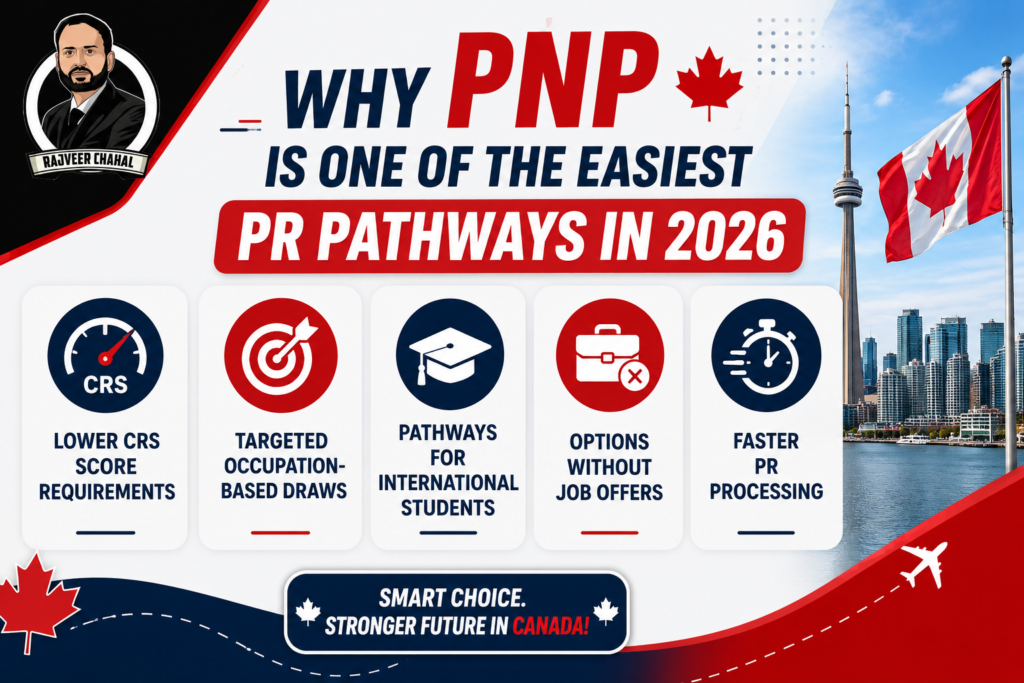
The Canadian government continues to prioritise regional immigration to solve labor shortages outside major metropolitan cities. This is why many provinces are increasing their nomination quotas and targeting international talent in 2026.
Here are some reasons why Canada PR under PNP is considered easier compared to other pathways.
- Lower CRS Score Requirements
One of the biggest advantages of provincial nomination programs is that they often invite candidates with lower CRS scores compared to federal Express Entry draws. Some provinces even conduct direct occupation-based selections.
- In-Demand Occupation Streams
Many provinces target applicants from industries facing worker shortages such as:
- Healthcare
- Trucking
- IT
- Construction
- Hospitality
- Skilled trades
If your work experience matches provincial demand, your chances of selection improve significantly.
- International Student Advantages
Graduates from Canadian colleges and universities receive strong advantages under many provincial streams. Some provinces even offer dedicated pathways for international students.
- Opportunities Without Job Offers
Several provinces offer pathways that do not require a valid Canadian job offer. This makes easy Canada PR pathways accessible for overseas applicants as well.
- Faster Immigration Process
Enhanced PNP streams connected with Express Entry generally have faster processing times, making them highly attractive for skilled workers.
Best Provinces for Canada PR Through PNP in 2026
Choosing the right province is extremely important because every province has different eligibility criteria and occupation demands.
- Ontario Immigrant Nominee Program (OINP)
Ontario remains one of the top choices due to its strong economy and regular Express Entry draws.
Popular streams include:
- Human Capital Priorities Stream
- Employer Job Offer Stream
- International Student Stream
Technology professionals, healthcare workers, and skilled tradespeople are expected to remain highly demanded in Ontario during 2026.
- Alberta Advantage Immigration Program (AAIP)
Alberta is known for selecting candidates with comparatively lower CRS scores.
Applicants with:
- Canadian education
- Alberta work experience
- Family connections in Alberta
may receive better chances under the Canada immigration PNP system.
- Saskatchewan Immigrant Nominee Program (SINP)
Saskatchewan is widely considered one of the easiest provinces for immigration because of its occupation-focused pathways.
Benefits include:
- Lower eligibility scores
- Streams without job offers
- High demand for skilled workers
- Manitoba Provincial Nominee Program (MPNP)
Manitoba frequently invites applicants with family support, education, or work experience in the province.
International graduates and semi-skilled workers can also find good immigration opportunities here.
Easy Ways to Improve Your PNP Selection Chances
Applying strategically can significantly improve your chances of receiving a provincial nomination in 2026.
- Improve Your IELTS or CELPIP Scores
Language proficiency plays a major role in both Express Entry and provincial selection. Better scores increase your CRS ranking and improve eligibility for various streams.
French language proficiency may also provide additional immigration advantages.
- Choose High-Demand Occupations
Applicants working in shortage occupations often receive priority invitations. Industries expected to remain in high demand include:
- Healthcare
- Technology
- Truck driving
- Agriculture
- Hospitality
- Construction
Having relevant experience in these sectors can strengthen your Canada PR through PNP application.
- Study in Canada
Canadian education provides multiple immigration benefits including:
- Additional CRS points
- Better job opportunities
- Access to graduate-specific provincial streams
International students often receive preference under provincial programs.
- Secure a Job Offer
Although not mandatory for every stream, a valid job offer from a Canadian employer can improve your profile significantly.
Employer-driven streams are among the most effective easy Canada PR pathways available today.
- Keep Your Express Entry Profile Updated
Many provinces search the Express Entry pool to select eligible candidates. Ensure that your:
- Work experience
- Educational qualifications
- Language scores
- Family details
remain updated at all times.
Eligibility Requirements for Canada PR Under PNP
While requirements differ by province, most PNP streams commonly require the following:
- Educational Qualifications
Applicants generally need secondary or post-secondary education. Some streams may require Educational Credential Assessment (ECA).
- Skilled Work Experience
Relevant work experience in eligible occupations is important for most provincial programs.
- Language Proficiency
IELTS, CELPIP, or TEF test scores are usually mandatory.
- Proof of Settlement Funds
Applicants may need to demonstrate sufficient financial support to settle in Canada.
- Intent to Reside in the Province
You must show genuine intention to live and work in the province that nominates you.
Understanding these requirements early can make the Canada PR under PNP process smoother and more successful.
Step-by-Step Process to Apply for PNP in 2026
The application process for Provincial Nominee Program Canada generally follows these steps:
Step 1: Identify the Right Province
Research provinces that match your occupation, qualifications, and goals.
Step 2: Create an Express Entry Profile
Enhanced PNP streams require an active Express Entry profile.
Step 3: Apply to the Province
Submit your provincial application through the selected stream.
Step 4: Receive Provincial Nomination
If selected, the province will issue a nomination certificate.
Step 5: Apply for Permanent Residency
Use the nomination to apply for Canadian permanent residency through IRCC.
Step 6: Complete Medical and Security Checks
Applicants must pass medical examinations and background verification.
Step 7: Receive PR Approval
Once approved, you can officially move to Canada as a permanent resident.
Final Thoughts
The Provincial Nominee Program is expected to remain one of the strongest immigration pathways for skilled workers in 2026. With labour shortages increasing across multiple provinces, there will continue to be strong opportunities for applicants with the right qualifications and experience.
For many applicants, Canada PR under PNP offers a faster, easier, and more practical route to permanent residency compared to traditional immigration programs.
With proper planning and the right provincial strategy, 2026 could become the perfect year to start your Canadian immigration journey. Contact us if you have any queries.
Watch Video
FAQs
1. What is Canada PR under PNP?
Canada PR under PNP refers to obtaining Canadian permanent residency through the Provincial Nominee Program, where provinces nominate skilled workers based on labor market needs.
2. Is PNP easier than Express Entry in 2026?
Yes, for many applicants, PNP can be easier because provinces may select candidates with lower CRS scores and targeted occupations.
3. Which province is easiest for Canada PR in 2026?
Provinces like Saskatchewan, Alberta, and Manitoba are often considered easier due to flexible eligibility requirements.
4. Can I apply for PNP without a job offer?
Yes, several provincial streams allow applicants to apply without a valid Canadian job offer, especially under occupation-in-demand categories.
5. How many CRS points do I get after a PNP nomination?
A provincial nomination adds 600 CRS points to your Express Entry profile, significantly increasing your chances of receiving an ITA.
6. What IELTS score is required for Canada PNP?
The required IELTS score depends on the province and stream, but most programs generally require CLB 5 to CLB 7.
7. Which occupations are in demand for PNP in 2026?
Healthcare, IT, trucking, construction, hospitality, agriculture, and skilled trades are expected to remain highly demanded sectors.
8. Can international students apply for PNP in Canada?
Yes, many provinces have dedicated immigration streams for international students graduating from Canadian institutions.
9. How long does the PNP PR process take?
Processing times vary by province and stream, but enhanced PNP applications linked with Express Entry are generally processed faster.
10. Is French language beneficial for Canada PR under PNP?
Yes, French proficiency can increase CRS scores and improve eligibility for specific provincial and federal immigration streams.