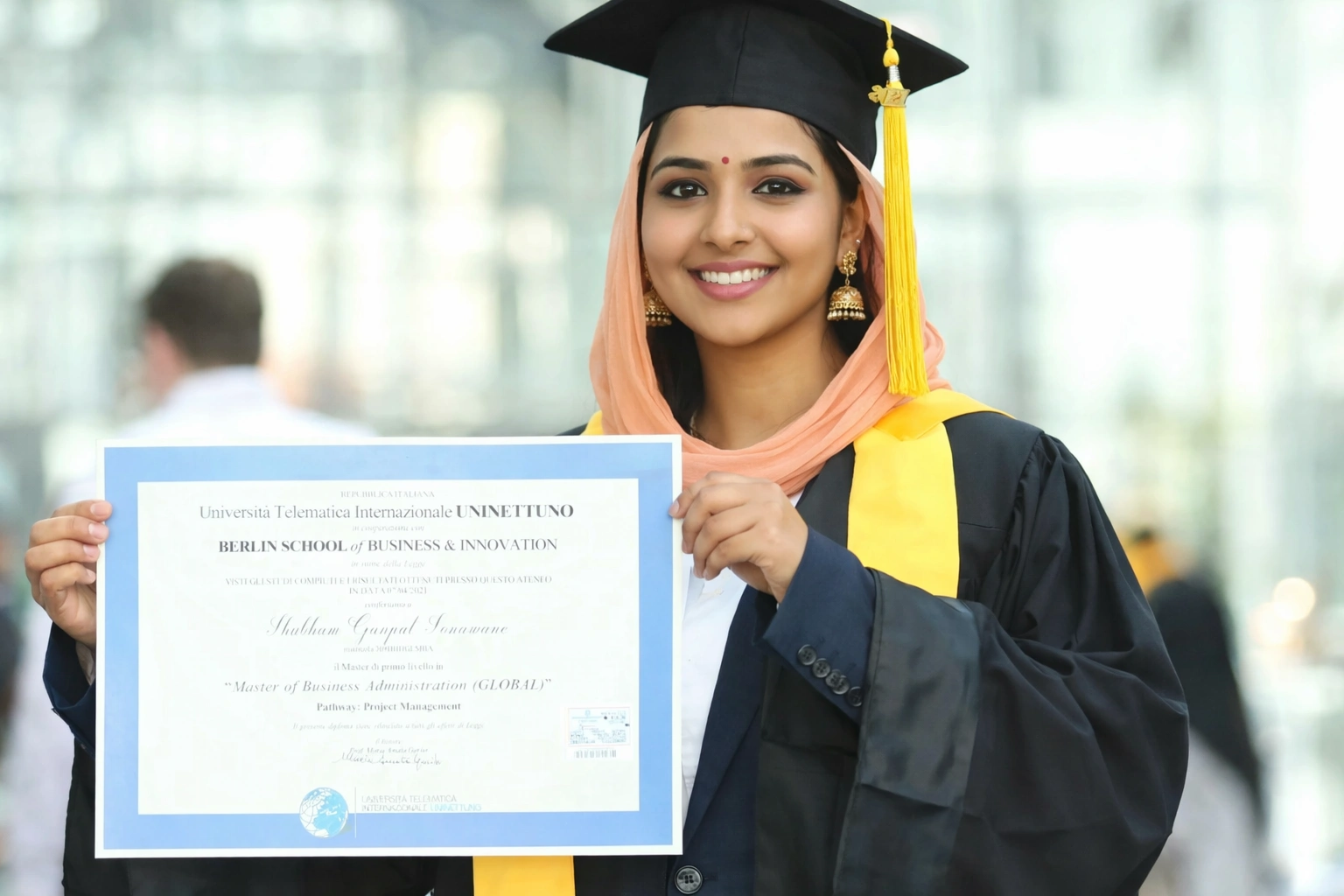
Study Visa Germany

Study Visa Germany

Why Germany?

A Germany Study Visa (National Visa – Type D) is a long-term residence visa allowing foreign nationals to enter Germany for full-time academic studies at a recognized institution. It legally allows students to –

  • Study full-time at a state-recognized university
  • Work within legally permitted limits
  • Transition to a post-study job-seeking residence permit
  • Apply for long-term residence later (subject to conditions)
Important Clarifications
  • A Germany study visa is not a Schengen tourist visa
  • University admission does not guarantee visa approval
  • Visa officers assess financial security and intent, not just acceptance letters

Who Is eligible For German Study Visa?

Germany does not operate on a checklist-based approval system. Decisions are based on overall credibility and compliance with the German Residence Act (AufenthG).

    Germany Student Visa Eligibility (Indians – 2026)
    Area What Officers Assess
    Academics Eligibility for German higher education
    Course logic Direct relevance to prior studies
    Language German/English proficiency as required
    Finances Ability to self-fund without work reliance
    Intent Genuine temporary study purpose
New Project

Germany Study Visa After 12th (Indian Students)

Students applying after Class 12 must typically:

  • Complete Studienkolleg (foundation course), or
  • Hold eligibility through IB / A-Levels / recognized pathways
Visa officers expect absolute clarity on:​
  • Why Germany
  • Why this academic route​
  • Why this level of study now​

Random bachelor selections or unclear foundation logic are common refusal triggers.

Germany Students - Rajveer Chahal

Germany Visa Age Limit

    There is no official age limit. However:

    • Higher age + long study gaps = higher scrutiny
    • Career-aligned master’s applications offset age concerns​
    • Academic downgrades (e.g., second bachelor without logic) raise red flags​

Germany Study Visa Process

The Germany study visa process is sequential and unforgiving. An error at any stage can delay or derail approval.

Canada Student Visa Eligibility for Indians (2026)

StepPurpose
Course & university selectionAcademic legality check
Admission confirmationProof of study intent
Blocked account setupFinancial self-sufficiency
SOP / motivation letterIntent explanation
APS certificate (India)Academic verification
Biometrics & interviewLegal assessment
Visa decisionFinal authority
How to Check Universities in Germany
Students should verify institutions using:
  • DAAD database
  • University anabin/H+ status

Rankings help with academic quality, but do not influence visa approval.

Proof: Financial Requirements (2026)

Financial proof is the most critical section of a Germany study visa application. Germany requires students to prove full financial independence without relying on employment.

What You Must Show/Prove for Germany Student Visa (2026)

Expense CategoryAmount (EUR / year)Approx. Amount (INR / year)Document Type
Blocked Account (Living Expenses)€11,904₹10,60,000 – ₹10,80,000Blocked account statement (Sperrkonto) required by German authorities; must show continuous holding before visa application.
Tuition Fees (if applicable)€0 – €3,000+₹0 – ₹2,70,000+Receipt or official invoice showing payment for first year or first two semesters, or proof of education loan/scholarship.
Health Insurance (Mandatory for Visa)€1,320 – €1,800₹1,15,000 – ₹1,60,000Insurance certificate or policy valid in Germany.
Visa Application Fee (one-time)€75₹6,800Visa fee payment receipt.
Residence Permit Fee (after arrival)€100 – €110₹9,000 – ₹9,900Receipt after registering in Germany (not part of visa application, but must be budgeted).

Note – Tuition depends on university; many public universities charge only semester contribution fees (~€150–€350/semester), but some states or private programs may charge more. Estimate includes modest tuition fees where applicable.

Key Visa Proof Notes
  • The blocked account (€11,904) is the central proof of funds that all applicants must demonstrate before their visa appointment.
  • Tuition proof (if charged) must also be demonstrated; if the university doesn’t bill in advance, alternative proofs (loan sanction letter, sponsor letter, official fee schedule) are accepted.
  • Health insurance must be valid for the duration of the visa.

What You Should have before Applying Germany Student Visa (2026)

Expense CategoryTypical Annual Cost (EUR)Approx. INR EquivalentNotes
Tuition Fees (public uni)€0 – €3,000₹0 – ₹2,70,000Most public universities are tuition-free, but some charge fees for certain programs.
Semester Contribution€300 – €700₹27,000 – ₹63,000Payable annually for administration, services, and student transit pass.
Accommodation€3,600 – €7,200₹3,20,000 – ₹6,50,000Shared flat/dorm to private apartment; varies by city.
Food & Groceries€1,800 – €3,000₹1,60,000 – ₹2,70,000Self-cooked groceries with occasional Mensa meals.
Health Insurance€1,320 – €1,800₹1,15,000 – ₹1,60,000Public student health insurance.
Transport€360 – €1,200₹31,000 – ₹1,08,000Often included in semester ticket; otherwise additional transit costs.
Study Materials & Books€300 – €600₹27,000 – ₹54,000Textbooks and academic supplies.
Miscellaneous (phone, internet, leisure)€800 – €1,500₹72,000 – ₹1,35,000Clothing, activities, and personal expenses.
Travel & Arrival Costs (one-time)€300 – €700₹27,000 – ₹63,000Initial arrival transport and setup.

Estimated Total Budget (First Year)

  • Low Estimate: ~€8,280 (~₹7,38,000)
  • High Estimate: ~€18,700 (~₹16,73,000)

Note: This realistic range includes tuition expectations where applicable, semester fees, living expenses, and one-time setup costs you should budget beyond the blocked account.

Germany Student Visa - Rajveer Chahal

Summary & Practical Tips

    For Visa Approval
    • You must show proof of funds (€11,904 blocked account) before applying.
    • University fees or proof of ability to pay them must be documented.
    • Health insurance proof is essential.

    • Before You Go (Real Life Budget)
    • Expect actual annual costs (tuition + living + insurance + misc) between ~€8,000 – €18,000 depending on city, accommodation, and lifestyle.
    • Cities like Munich/Frankfurt cost more; smaller university towns are cheaper

Key Notes

  • Blocked account: Students must show a blocked account balance of at least €11,904 per year as proof of funds for the Student Visa — this is a minimum requirement and not a tuition fee.
  • Tuition fees: Most public universities in Germany offer tuition-free education for international students, but some states (e.g., Baden-Württemberg) charge up to €3,000/year for non-EU students.
  • Semester contribution: Even at “free” universities, students pay a semester fee that typically covers administration, student services, and often a transport pass.
  • Living expenses: Typical living costs (rent, food, utilities, insurance) average about €10,000–€12,000 per year depending on city and lifestyle.
  • Location impact: Cities like Munich and Frankfurt tend to be more expensive, while smaller cities (e.g., Leipzig, Dresden) can be more affordable.

Conversion Disclaimer: ₹ figures are approximate and depend on the prevailing EUR → INR exchange rate.

Acceptable Financial Proof
  • 1- German blocked account (mandatory in most cases)
  • 2- Official scholarships
  • 3- Formal obligation letter (Verpflichtungserklärung – limited cases)

Unacceptable approach:
“Planning to work part-time to cover living expenses” — this is a direct refusal trigger.

German Study Visa Processing Time

  • Embassy workload
  • APS verification status
  • Interview complexity
  • Document completeness

General Observations (India)

StageWhat Happens
Pre-interviewDocument & APS verification
InterviewIntent and preparedness assessment
Post-interviewBackground & financial review
Final stageVisa approval or refusal

Incomplete financial proof or unclear motivation letters cause long delays.

Risks: Why Germany Study Visas Get Refused

Germany refusals are logic-based not volume-based.

Top Refusal Reasons
Risk Area Explanation
Finances Insufficient or unreliable funding
Course mismatch No academic continuity
Language Inadequate German/English level
Intent Settlement or work-first mindset
Preparation Poor knowledge of course/university

A refusal is recorded permanently and affects future Schengen and national visa applications.

Visa Granted - Rajveer chahal

Our Visa First Approach

    Germany study visas require legal precision, not sales-driven counselling.

    How Our Approach Reduces Risk
    • University and course eligibility checked against German law
    • SOP written for visa officers, not admission committees
    • Financial structure validated before blocked account funding
    • Gap and age scrutiny addressed before interview
    • APS and embassy compliance checks at every stage
      • Law first. Logic second. Application last.

        Applying without clarity risks:

      • Losing 1–2 academic intakes
      • Locked blocked-account funds
      • Long-term Schengen visa complications
      • A structured pre-application review reduces refusal probability significantly.

        Get Your Germany Study Visa Profile Reviewed.

        Check Eligibility & Financial Readiness.Speak With a Germany Study Visa Expert

Legal Disclaimer

This content is provided for general informational purposes only and does not constitute legal advice. Germany Study Visa requirements (2026), financial thresholds, and processing practices are subject to change by German authorities without prior notice. Final decisions rest solely with the visa officer. Applicants are advised to seek professional guidance before submitting an application.

Profile & Eligibility Concerns (FAQ)

  • Does Germany reject visas due to low IELTS alone?

    No. Refusals usually stem from financial or intent issues, not IELTS alone.

  • Can average students get a Germany study visa?

    Yes, if they meet academic eligibility and show genuine preparedness.

  • Are study gaps an automatic rejection?

    No, if logically explained and professionally aligned.

  • Does age above 30 reduce chances?

    It increases scrutiny, not refusal, if the study plan is credible.

  • Can working professionals apply?

    Yes, especially for career-aligned master’s programs.

Course & University Doubts

  • Do public universities guarantee visas?

    No. Visa approval is independent of university type.

  • Is changing academic fields risky?

    Yes, unless the transition is academically justified.

  • Does DAAD ranking guarantee approval?

    No. Rankings do not replace legal intent assessment.

  • Is German language mandatory?

    Only if the program requires it; visa officers assess readiness.

  • Does Studienkolleg reduce refusal risk?

    Only if it is academically required and logically chosen.

Financial Proof Questions

  • Is the blocked account mandatory?

    In most cases, yes.

  • Can education loans replace blocked accounts?

    Generally no, unless converted into approved financial proof.

  • Can parents sponsor without a blocked account?

    Rarely, and only under strict conditions.

  • Is showing extra money helpful?

    No, unexplained excess funds raise questions.

  • Can part-time work cover living costs?

    No. This assumption leads to refusals.

Intent & Interview Concerns

  • Do visa officers ask academic questions?

    Yes, especially about course content and outcomes.

  • Is a generic SOP risky?

    Yes. Germany refusals often cite poor motivation letters.

  • Can PR plans be mentioned?

    No. Germany expects temporary study intent.

  • Does having relatives in Germany hurt the case?

    Only if return intent is not clearly demonstrated.

  • Is career outcome important?

    Yes, but it must flow logically from education.

Our Google Reviews