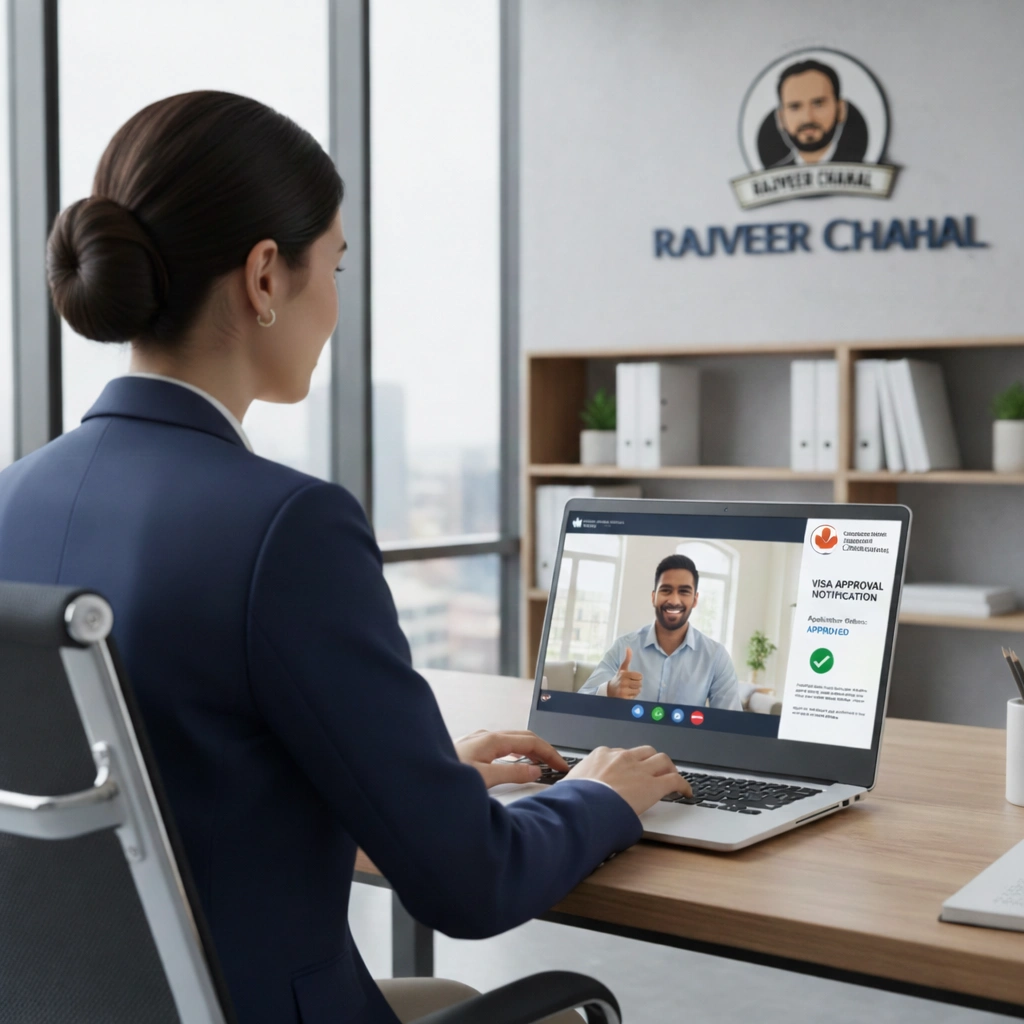
Study Visa For Australia

Study Visa Australia

Why Australia?

Australia’s international education system is regulated by the Department of Home Affairs and education standards under CRICOS-registered institutions, ensuring transparency, compliance, and student protection. Indian students choose the Australia Student Visa (Subclass 500) because it combines:

  • Globally recognised education that enhances your international career value
  • Legal work rights during study to gain experience and support living expenses
  • Structured post-study work pathways without forcing students to exit immediately after graduation

Unlike countries with uncertain student policies, Australia operates under clearly codified migration and education law, published openly on immi.gov.au.

Key Advantages at a Glance

Factor Australia
Work during study Up to 48 hrs/fortnight
Work during breaks Unlimited
Post-study work Temporary Graduate Visa (Subclass 485)
PR pathways Points-based GSM, State Nomination
Policy transparency High (law-driven)
Reality Check

Australia does not refuse visas arbitrarily. Refusals usually occur when applicants fail to prove Genuine Student intent, financial capacity, or logical academic progression – not because Australia is “strict.”

What is an Australian Study Visa

An Australia Student Visa (Subclass 500) is a temporary visa allowing international students to study full-time at a CRICOS-registered education provider in Australia. It legally allows students to:


    • Study full-time
    • Work part-time during academic sessions
    • Work full-time during official vacations
    • Work full-time during scheduled breaks
    • Bring eligible dependents (with conditions)
    • Apply for post-study work visas (if eligible)

    Important Clarifications

    • A student visa is not a tourist visa
    • An offer letter alone does not guarantee approval
    • Visa officers assess intent, not just documents
Australian Study Visa - Rajveer Chahal

Who Is Eligible For An Australia Student Visa?

Australia does not follow a mechanical checklist. Visa officers assess the overall student profile, guided by the Genuine Student (GS) requirements.

AreaWhat Officers Assess
AcademicsConsistency & progression
Course SelectionCareer relevance
English AbilityCapacity to study in English
FinancesSustainability, not just balance
IntentGenuine student purpose
TiesPost-study logic (India/Australia)
Australia Study Visa - Rajveer Chahal

Australia Student Visa After 12th

    Students applying after Class 12 must clearly justify:

    • Why this course
    • Why Australia
    • How it fits long-term career goals
    • Random course changes or academic downgrades are among the top refusal triggers.

      Australia Student Visa Age Limit

      There is no official age limit. However:

    • Age + study gap + weak justification = higher scrutiny
    • Strong professional alignment can offset age concerns

Australia Study Visa Process

The Australia Student Visa process is sequential and interdependent. Errors early in the process often lead to refusal later.

StepPurpose
Course & CRICOS selectionVisa eligibility foundation
Offer letter issuanceAdmission confirmation
GTE → GS assessmentIntent evaluation
Financial planningSustainability check
OSHC purchaseHealth compliance
Biometrics & medicalSecurity & health clearance
Application submissionFinal assessment

How To Check UK Universities in Australia

Institutions must be CRICOS-registered. Tools like QS Rankings help assess reputation, but ranking alone never guarantees visa approval.

Proof: Financial Requirements (2026)

Financial capacity is one of the most scrutinized areas of an Australia Student Visa application.

Visa officers assess whether the student can live and study without financial stress, as per official thresholds published on immi.gov.au.

What You Must Prove / Show (Minimum - 2026)

Expense Category Required to Show (Annual) Approx. INR
Tuition fee (first year) AUD 20,000 – 45,000 ₹10.8 – 24.3 L
Living expenses (student) AUD 24,505 ₹13.2 L
Partner (if applicable) AUD 8,574 ₹4.6 L
Child (if applicable) AUD 3,670 ₹2.0 L
Return airfare AUD 2,000 – 3,000 ₹1.1 – 1.6 L
OSHC (health insurance) AUD 600 – 1,200 ₹32k – 65k
Visa application fee AUD 710 ₹38k

What You Should Have Before Applying (Recommended Buffer)

These are real-world costs, not just minimum proof figures.
Expense Category Recommended Amount (Annual) Approx. INR
Tuition (average) AUD 25,000 – 45,000 ₹13.5 – 24.3 L
Actual living costs AUD 26,000 – 32,000 ₹14.0 – 17.3 L
Rent & utilities AUD 12,000 – 18,000 ₹6.5 – 9.7 L
Food & groceries AUD 4,500 – 7,000 ₹2.4 – 3.8 L
Transport & phone AUD 2,000 – 3,000 ₹1.1 – 1.6 L
Books & supplies AUD 800 – 1,500 ₹43k – 81k
Personal & emergency AUD 2,500 – 4,000 ₹1.3 – 2.2 L
Settlement buffer AUD 2,000 – 3,000 ₹1.1 – 1.6 L
Total Recommended Funds AUD 55,000 – 75,000 ₹29 – 40 L
Why This Buffer Matters
  • Actual rent and living costs in cities like Sydney & Melbourne exceed minimum figures
  • Unexpected expenses are not covered in bare-minimum proof
  • A financial buffer strengthens GS credibility
Australian Work and Study Visa - Rajveer Chahal

Australia Student Visa Processing Time

    It depends upon

    • Intake season
    • Risk profile
    • Document completeness
    • Verification after biometrics
    • Risks: Why Australia Study Visas Get Refused

      Refusals are driven by logic gaps

      A refusal becomes part of your permanent immigration record
      Risk Area Explanation
      GS statement Generic or inconsistent
      Course mismatch No career relevance
      Finances Unsustainable funding
      Study gaps Poorly justified
      Immigration intent Study seen as PR shortcut

Our Visa-first Approach

We design applications from a visa officer’s perspective, not sales brochures. How Our Approach Reduces Risk

Visa Granted - Rajveer chahal

Apply With Clarity

    Applying without clarity risks:

    • Losing an intake year
    • Financial loss
    • Long-term PR complications

    A structured pre-submission review significantly improves approval probability.


    Get Your Australia Student Visa Profile Reviewed Check Processing Time & Eligibility Speak With a Study Visa Expert

Legal Disclaimer

This content is for general informational purposes only and does not constitute legal advice. Australia Student Visa (Subclass 500) requirements, financial thresholds, and processing times are subject to change by the Australian Government without prior notice. Final decisions rest solely with the visa officer. Applicants are advised to seek professional guidance before applying.

Genuine Student (GS) Requirement (FAQ)

  • What is the Genuine Student (GS) requirement?

    The GS requirement assesses whether you genuinely intend to study in Australia and whether your education plan is logical, temporary, and credible - not a disguised migration attempt.

  • Is the GS requirement a points-based test?

    No. GS is a holistic assessment, not a checklist. Officers evaluate your background, course choice, finances, and future plans together.

  • Does GS replace the old GTE requirement?

    Yes. GS replaced GTE to focus more on student intent and education logic, rather than broad migration suspicion.

  • Do visa officers actually read GS statements?

    Yes. GS statements are one of the most influential documents in Subclass 500 decisions and often determine approval or refusal.

Course & Academic Logic (Major GS Risk Area)

  • Can I change my field of study for Australia?

    Yes, but you must clearly explain

    • Why the change is necessary
    • How it improves career prospects
    • Why it could not be achieved in India

    Unexplained or drastic changes are a common refusal reason.

  • Is choosing a lower-level course after graduation risky?

    Yes. Academic downgrades (e.g., Master’s → Diploma) trigger strong GS concerns unless professionally justified.

  • Does studying the same course as my previous qualification weaken GS?

    It can. Repeating similar education without clear skill advancement suggests poor study intent.

  • Does university ranking affect GS approval?

    Ranking alone does not matter. Course relevance and institutional credibility matter more than QS position.

  • Are private colleges risky under GS assessment?

    Not automatically. However, non-CRICOS-compliant or low-credibility institutions face higher scrutiny.

Financial Capacity & GS Assessment

  • Does showing more funds always strengthen GS?

    No. Unexplained or excessive funds raise doubts about financial genuineness.

  • Can education loans support GS requirements?

    Yes, if:

    • The loan is officially sanctioned
    • Repayment aligns with future income
    • Supporting income sources are realistic

  • Are recent deposits in bank accounts a problem?

    They can be, unless the source is clearly documented (sale of asset, matured investment, declared income).

  • Does paid tuition improve GS credibility?

    Yes. Paid tuition shows commitment and reduces financial risk perception.

Study Gaps, Age & Work Experience

  • Are study gaps automatically negative under GS?

    No. Gaps are acceptable when supported by:


    • Employment
    • Skill development
    • Business activity
    • Exam preparation
    • Unexplained gaps weaken GS significantly.

  • Is there an age limit for Australian student visas?

    No official age limit exists. However, age combined with weak study logic increases scrutiny.

  • Can working professionals apply under GS?

    Yes. In fact, well-aligned professionals often have stronger GS profiles if the course enhances career progression.

  • Is it risky to apply after many years of work?

    Only if the course does not logically add value to your professional background.

Intent, PR & Future Plans

  • Can I mention future PR plans in my GS statement?

    Yes, but education must remain the primary intent. PR cannot appear as the sole motivation.

  • Does wanting to stay in Australia permanently cause refusal?

    Not by itself. Refusal occurs when study appears to be only a migration shortcut, not a genuine education plan.

  • Should I mention family or relatives in Australia?

    Yes, if applicable - but you must clearly demonstrate stronger personal, economic, or professional ties outside Australia.

  • Do ties to India still matter under GS?

    Yes. Officers assess whether your background supports a temporary study intent, even if future pathways exist.

  • Why no updates after biometrics?

    Background checks run silently.

English Language & Academic Readiness

  • Does a low IELTS score lead to GS refusal?

    Not alone. Refusals occur when English ability does not match course demands.

  • Can students apply with PTE or alternative tests?

    Yes, as long as the test is accepted by both the institution and Home Affairs.

  • Does completing English studies in Australia improve GS chances?

    Only if the English course is academically necessary, not used as a visa extension tool.

Biometrics, Health & Character

  • Does completing biometrics mean GS is approved?

    No. Biometrics only initiate background and security checks.

  • Can medical issues cause GS refusal?

    Only if they pose public health risk or significant healthcare cost to Australia.

  • Do past visa refusals affect GS assessment?

    Yes. Undisclosed or poorly explained refusals significantly damage credibility.

Processing Time & Decision Patterns

  • Why does my application show no update for weeks?

    GS and background checks happen silently after biometrics.

  • Can GS assessment extend processing time?

    Yes. Complex profiles undergo deeper verification.

  • Does applying early improve GS approval chances?

    It reduces time pressure but does not influence officer judgment.

Refusals & Reapplication Strategy

  • Are GS refusal reasons detailed?

    No. Officers usually summarize risk areas, not provide corrections.

  • Should I reapply immediately after a GS refusal?

    Only after: Addressing refusal reasons Restructuring GS logic Adding new evidence Reapplying without change increases refusal risk.

  • Does one GS refusal affect future visas?

    Yes. Refusals remain permanently visible in immigration records.

  • Can GS refusals be appealed?

    Judicial review is possible but costly and rarely practical for student cases.

Strategic GS Questions (Critical but Often Ignored)

  • What is the biggest silent GS refusal trigger?

    Mismatch between education, finances, and career intent.

  • Is using a GS template risky?

    Yes. Generic statements are one of the top refusal triggers.

  • Does changing courses after visa grant affect GS?

    Yes. Unjustified changes can breach visa conditions and trigger cancellation.

  • Can dependents weaken a GS application?

    Not automatically. However, finances and study focus face higher scrutiny.

  • Are regional universities safer for GS approval?

    They can be, if the course choice and career logic remain strong.

  • What actually convinces a visa officer under GS?

    A clear, logical, financially sustainable education plan that makes sense on paper - without assumptions or emotional arguments.

Our Google Reviews